The Deep Sea
Dive into the mysterious depths of the sea, where unique creatures have adapted to life in extreme conditions
Start scrolling
what?
The deep sea covers most of the seafloor—in the Gulf of Eilat and worldwide—yet we know very little about it. It is hard to study without access and without light. The few sophisticated, costly technologies that do reach down show a deep sea teeming with odd, special creatures that have learned to live with one challenge after another.
where?
From 200 meters deep to about 700 m below the surface (in the Israeli sector of the Gulf of Eilat).
who?
Iago sharks, black corals, Steinitz’s lanternfish, the Eilat “magic” heart urchin, and abundant zooplankton that sit out daylight hours down here.
What is it good for?
The deep sea supports distinctive, fascinating biodiversity; it supplies essential nutrients and zooplankton, and underpins other marine habitats. The depths matter greatly to the “upper floors”—the shallow, sunlit zone.
Into the unknown
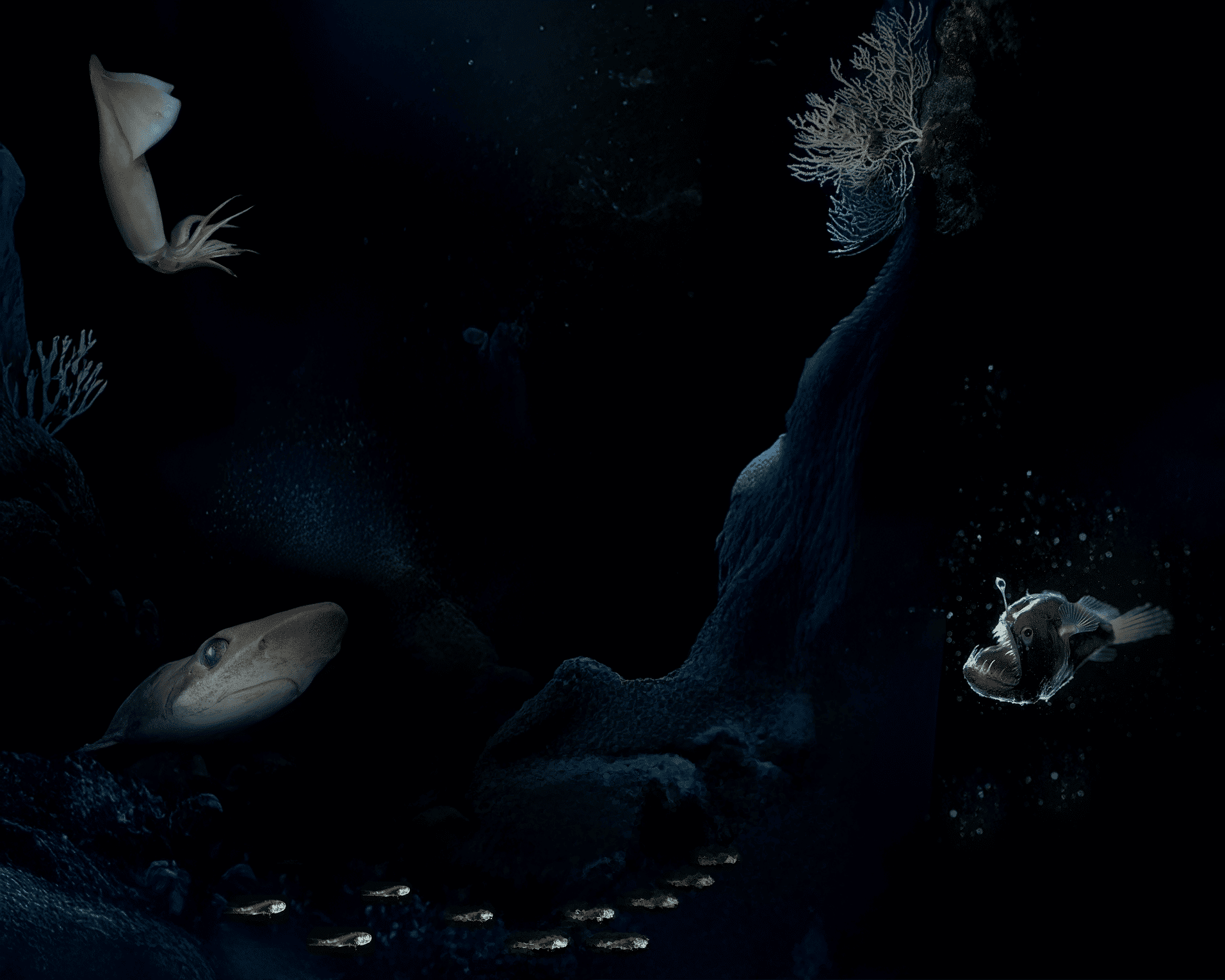
Somewhere in the ocean abyss, hundreds or thousands of meters down, lies a vast unknown. No dive course can take you there, however many specialties you collect. But suppose it could.
You drop hundreds of meters. Pressure from above—the weight of the water—bears down, crushing. Night or day? Sunlight never arrives to declare morning. Around you, endless dark.
What is there to eat? No plants—no seagrass, no algae. Tiny snowflakes drift from above: bits of life that once lived in the water column, shedding and breaking apart here—manna from the upper sea.
You are not alone. Now and then a pinprick glimmers—here, then there. A greenish flash, streaks of light—creatures that learned to survive the black. You have stepped into a huge riddle humanity is still trying to read.
Welcome to the deep sea—where light ends and challenges do not—200 meters and deeper below the surface. It is not only the dark sibling among habitats; it is dominant: it spans about two-thirds of Earth’s surface and most of the ocean’s volume, yet stays mysterious—only about one percent surveyed. We know the Moon’s face better than the deep seafloor. Why? Unlike other habitats, we cannot simply dive there. Cutting-edge, costly tech—ROVs, sound-and-light mapping—shifts the picture slightly, yet we still grope in darkness much like the deep itself.
Secrets unfold slowly, but what little we have seen is gorgeous and alive—from sharks and giant squid to animals scraping a living micron by micron; three-dimensional coral forests spreading arms that shelter, feed, and nursery sea life; spectacular submarine canyons thick with life—and surprises we do not yet know are there.
Secrets and surveys
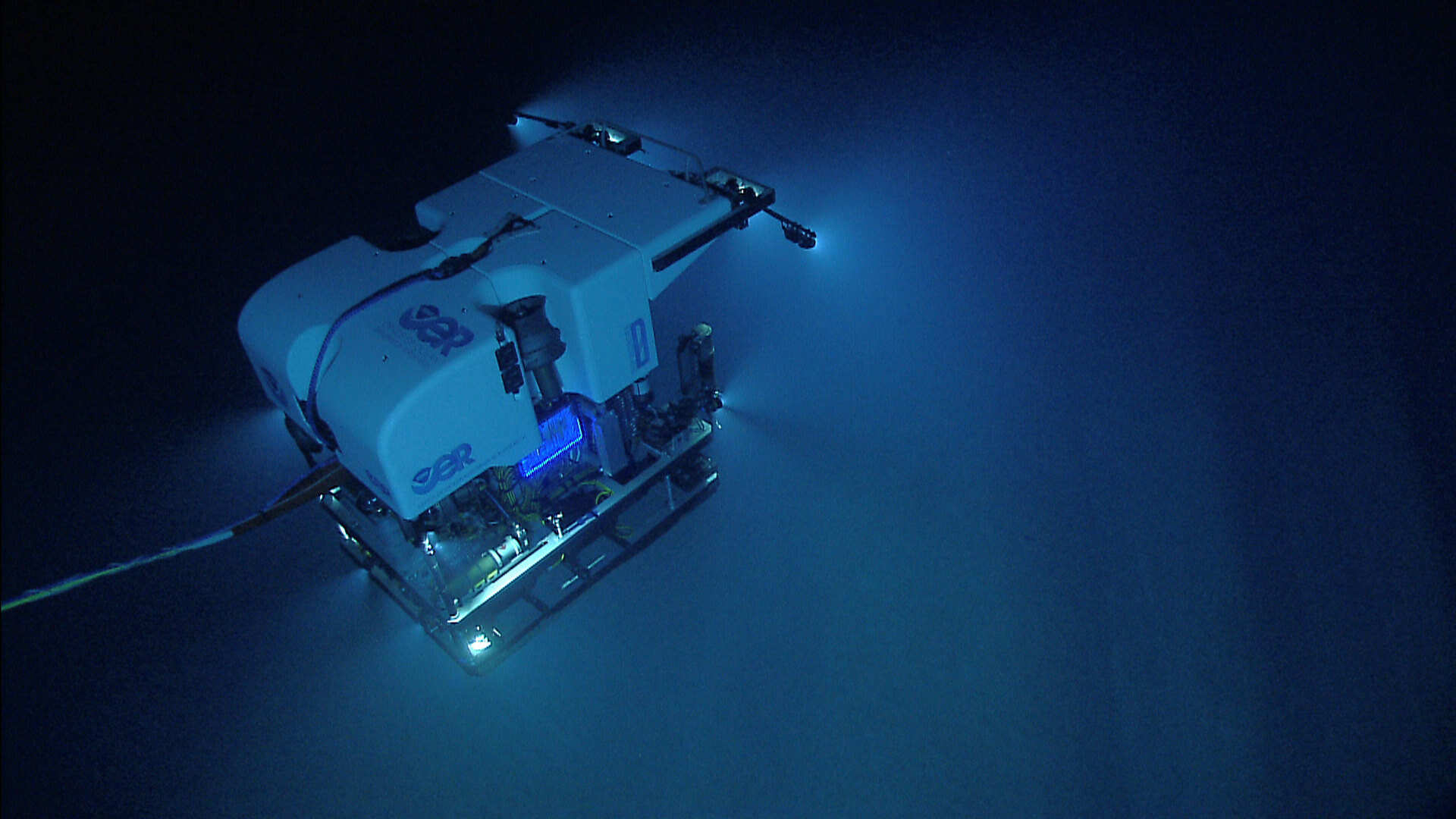
What do we know about the deep Gulf of Eilat? Even less. Past ROV surveys only reached about 250 m. A fish survey in Eilat and Sinai—nets and traps, less elegant—reached 900 m. The catch? Plenty—including eight shark species in our northern gulf. Wow.
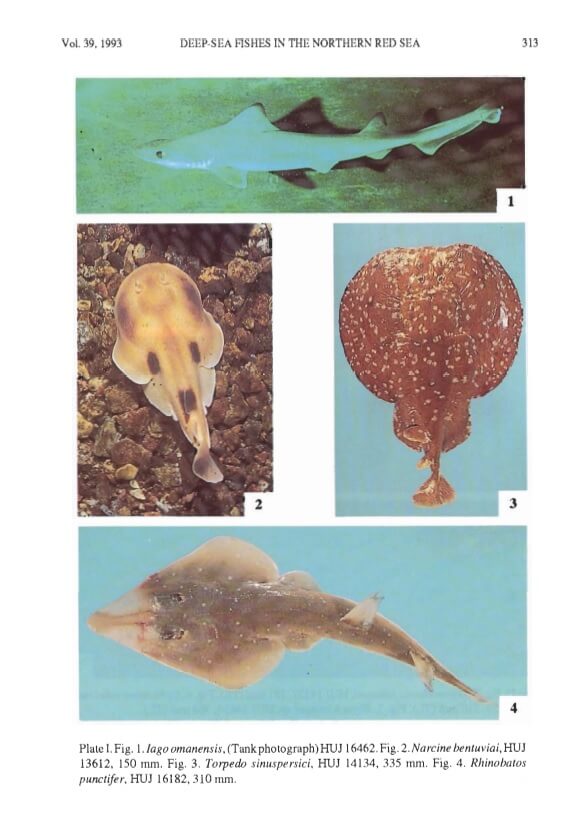
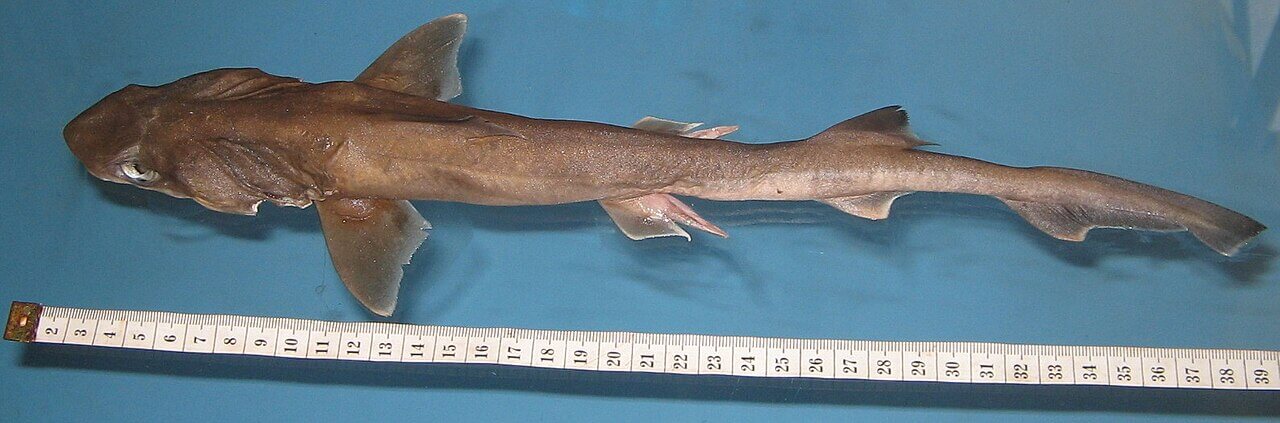
One is the Iago shark, a Red Sea celebrity—at least until the rest get their close-ups. Lately Iago has broken habit and visited the shallows; don’t worry—despite the “Othello” villain name, it is not a human threat.
Also on the list: dozens of fish hauled up from the depths, including rays you can spot by their kite silhouette—flat body, “wing” pectorals, trailing tail. Two species star when we reach “electrical engineering in the depths.”
Jump to 2006: the Eilat seabed got a full sonar once-over to map its shape—about time! Three striking canyons appeared in Eilat’s deep sea: one broad in the northwest (toward the northern shore—hotels, beaches, seagrass) and two narrow, steep ones along the south.
Submarine canyons—seaward cousins of land canyons—are steep, tight slopes and a boon to life: depth and current funnel food particles and plankton to many animals.
Crevices become homes—with shelter—for worms, crustaceans, mollusks, and more.
The canyons are also “Highway 6” for the sea’s night crowd: masses rise each sunset for a shallow-water midnight snack, then dive back to safe, dark depth at first light.
What happens next? A large, ambitious IUI canyon survey is set to map life down to 700 m below the surface.
And darkness over the face of the deep
What do deep-sea heroes face? Better ask—what don’t they? Begin with the first thing you “see”—you don’t. Nothing. Nada. Utter dark. In shallow water, sunbeams penetrate; tens of meters down you are already in twilight. Deeper still, the glow dies—darkness over the abyss and everything in it.
Light is gone, and load piles on: hydrostatic pressure—the weight of water “sitting” on you—is immense. At the surface, about one atmosphere—barely felt. Every ten meters adds another atmosphere; ten more meters, another stack of weights. At the deepest point in the Gulf of Eilat, pressure reaches roughly 187 kg per cm² on the body—like the crush inside a sturdy closed scuba cylinder.
Cold? Ocean abyss animals often face chill, yet Eilat’s deep enjoys relatively warm water for the depth—about 21 °C. How? A small, nearly closed basin, stirred water, and strict bouncers at the door—the Straits of Tiran—letting warm water in and keeping the worst cold out.
Food? Energy? In this blue desert there is no light for photosynthesis, no tireless zooxanthellae plating a carbohydrate buffet like on the shallow reef—so what do you eat? Crumbs. Most deep dwellers live on “marine snow”—leftover bits, algae fragments, waste, corpses drifting from sunlit water above. Do not sneer—those organic flecks keep the whole deep ecosystem running. Still… crumbs.
In sum: you see nothing, you eat crumbs, and tens of kilograms press on every square centimeter. Sounds grim—yet evolution issued you a briefcase of patents, a toolkit only nature builds, with the Innovation Authority riding shotgun.
What do deep-sea heroes face? Better ask—what don’t they? Start with the first thing you “see” in the depths—you don’t. Nothing. Nada. Utter dark. In shallow water, sunlight pierces through; the deeper you go, the light dies out—darkness over the abyss, and over every creature in it.

A flashlight in the eye
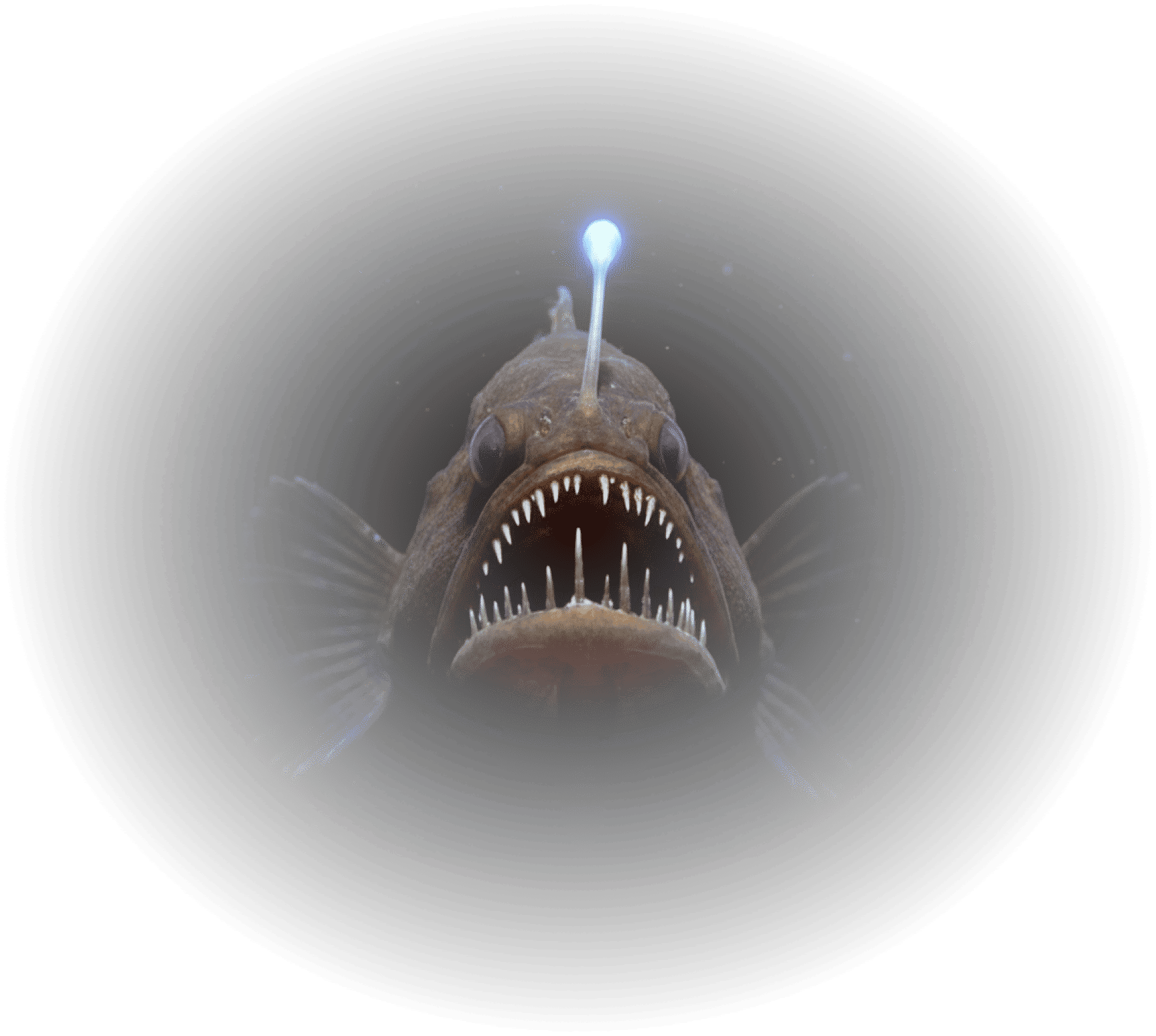
Say “patent,” say bioluminescence—“bios” is life in Latin, “lumen” is light—together, biological light: the trick that lets a firefly text a mate or blink predators away. How? Glow comes from chemistry between luciferin and luciferase. Almost no waste heat—cold light that does not cook the animal. Fireflies grabbed the fame, but countless others license the same patent.
Roughly three-quarters of deep-sea life—crustaceans, squid, worms, fish, bacteria, and more—pack an internal flashlight: lure prey, find partners, hide, or dazzle hunters. Bialik put the firefly in a poem; nobody wrote an ode to Steinitz’s lanternfish—a small black fish of the abyss that switches its built-in lamp to hunt and dims it on demand, bacteria glowing under the eyes in a bioluminescent pocket.
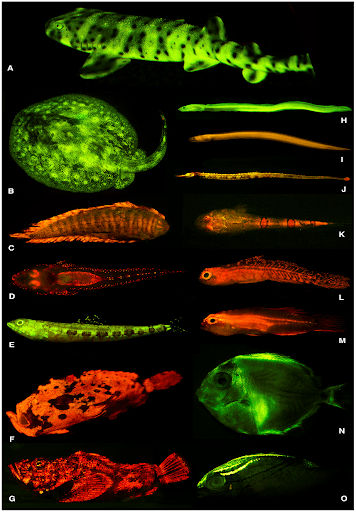
Speaking of lanterns—another deep-sea favorite: huge eyes. Steinitz’s lanternfish carries eyes so large they fill half the “face”—macro lenses tuned to catch the faintest glint.
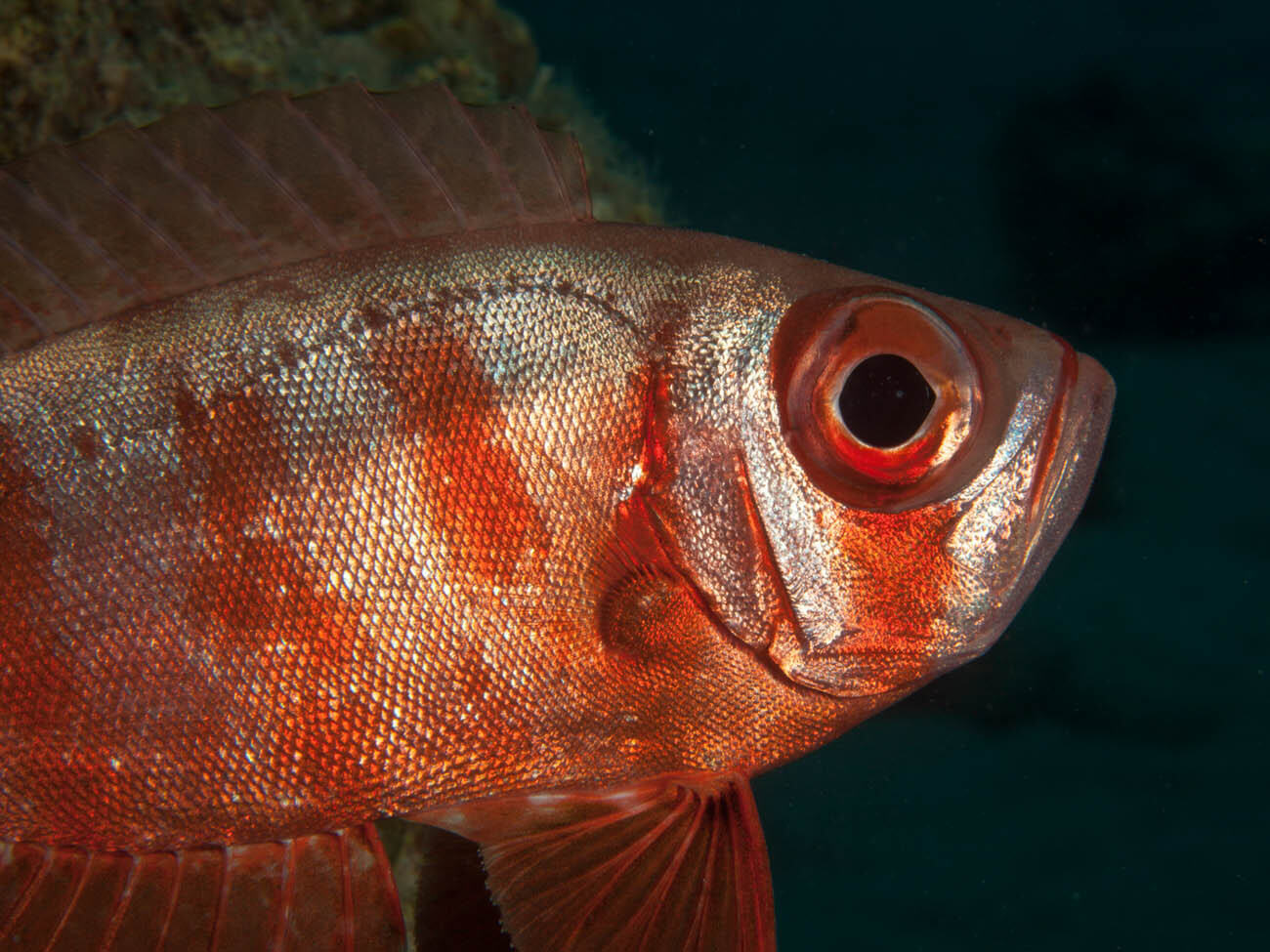
The Iago shark, too, runs enormous (green!) eyes for hunting without sun—rods packed in the retina for night vision. Humans keep rods for dim light, but we still want daytime color; Iago turned its whole retina into an ultrasensitive night camera. When it lately visited the reef, it may have missed the anthias’ paint job—yet a single photon from a glowing squid or a twinkling fish tens of meters off registers in total black.
Electricity in the palms of your hands
If you like sensory superpowers, meet electroreception—sharks, rays, chimeras, and deep fish wear tiny pores on the snout that read electric fields.
Why care about fields? Every living pulse spins faint currents—each twitch, each heartbeat. As an Iago shark hunting in absolute dark, that sense finds dinner—or a date. Some can even feel a heartbeat through sand.
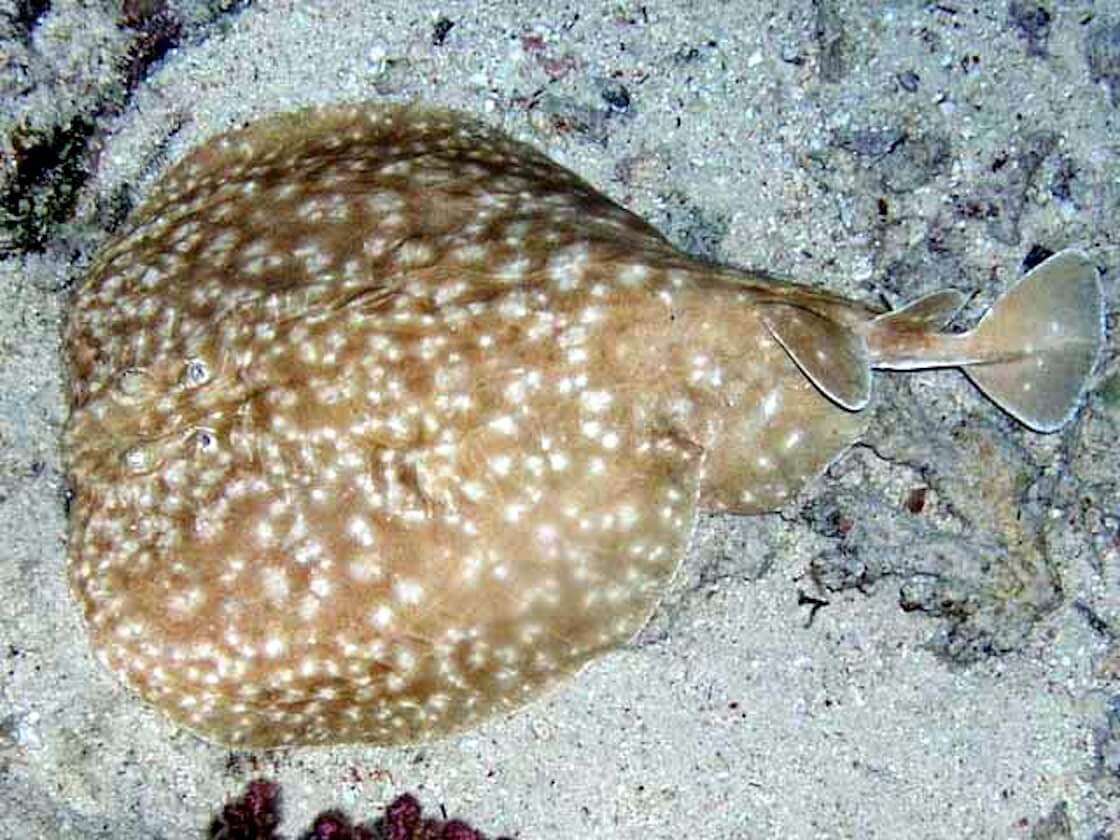
Others crank the voltage: Ben-Tuvia’s electric ray and the Persian torpedo ray turned up in the old Eilat–Sinai surveys—true electric fishes. Threatened or hungry, they land a shock via muscle plates that charge like capacitors—one big zap or a burst of little ones. Who needs sunlight when you have current?
Pressure cooker
Depth dwellers also match crushing pressure. Rigid tissue can fail, so gelatinous squid and jellyfish gain an edge. Stiffer bodies carry built-in give—elastic sheaths, layered shock-proofing, rubbery joints. The Iago shark wears thin, flexible cartilage that squeezes without cracking.
Corals? As light fades, stony corals yield to softer forms. Antipatharians—“black corals”—wear flexible protein skeletons like vast fans of bright wire. People once carved them into jewelry and prayer beads.
Gorgonians, named (fairly) for mythic Gorgons’ snake hair, are soft, colorful, and bend with current, then spring back. In 2012 a capable ROV surveyed the northern Red Sea deep—400–700 m down—and found magnificent coral forests: 156 colonies across seven species—one black, three gorgonians—a hint of what we may find off Eilat.
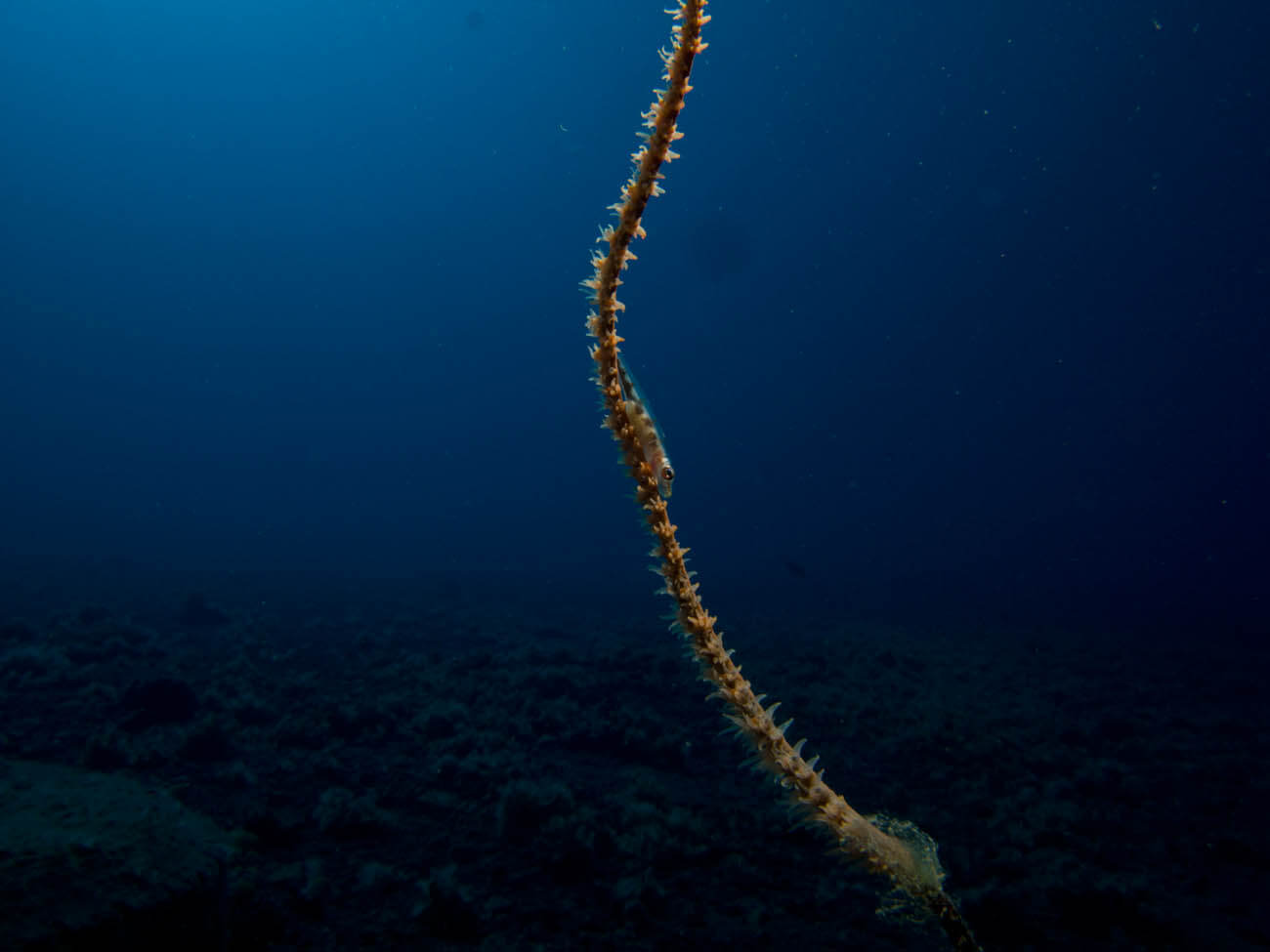
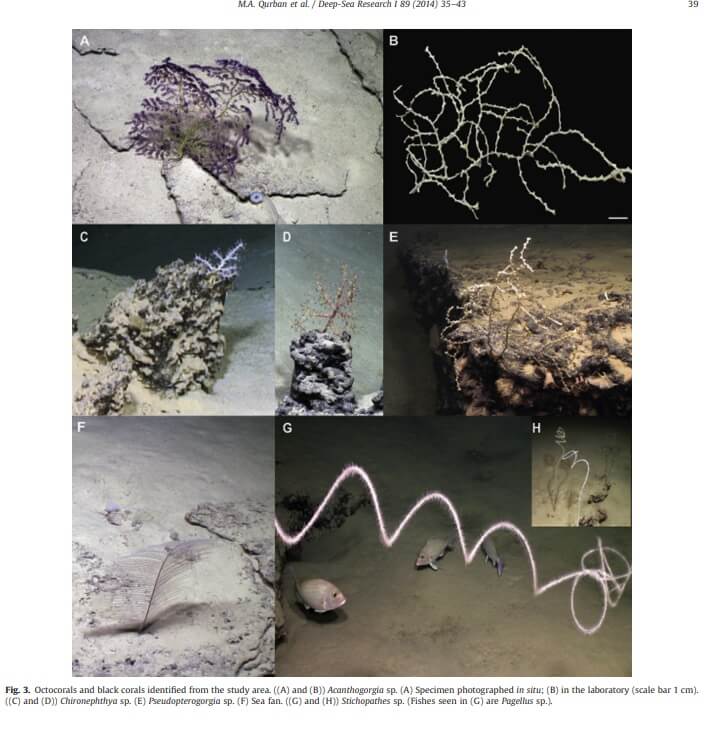
On that crumb diet—again, the doctor’s nightmare that actually works here: move little, spend little energy, keep life slow, grow slowly, live long. Scarce food means no wasted watts.
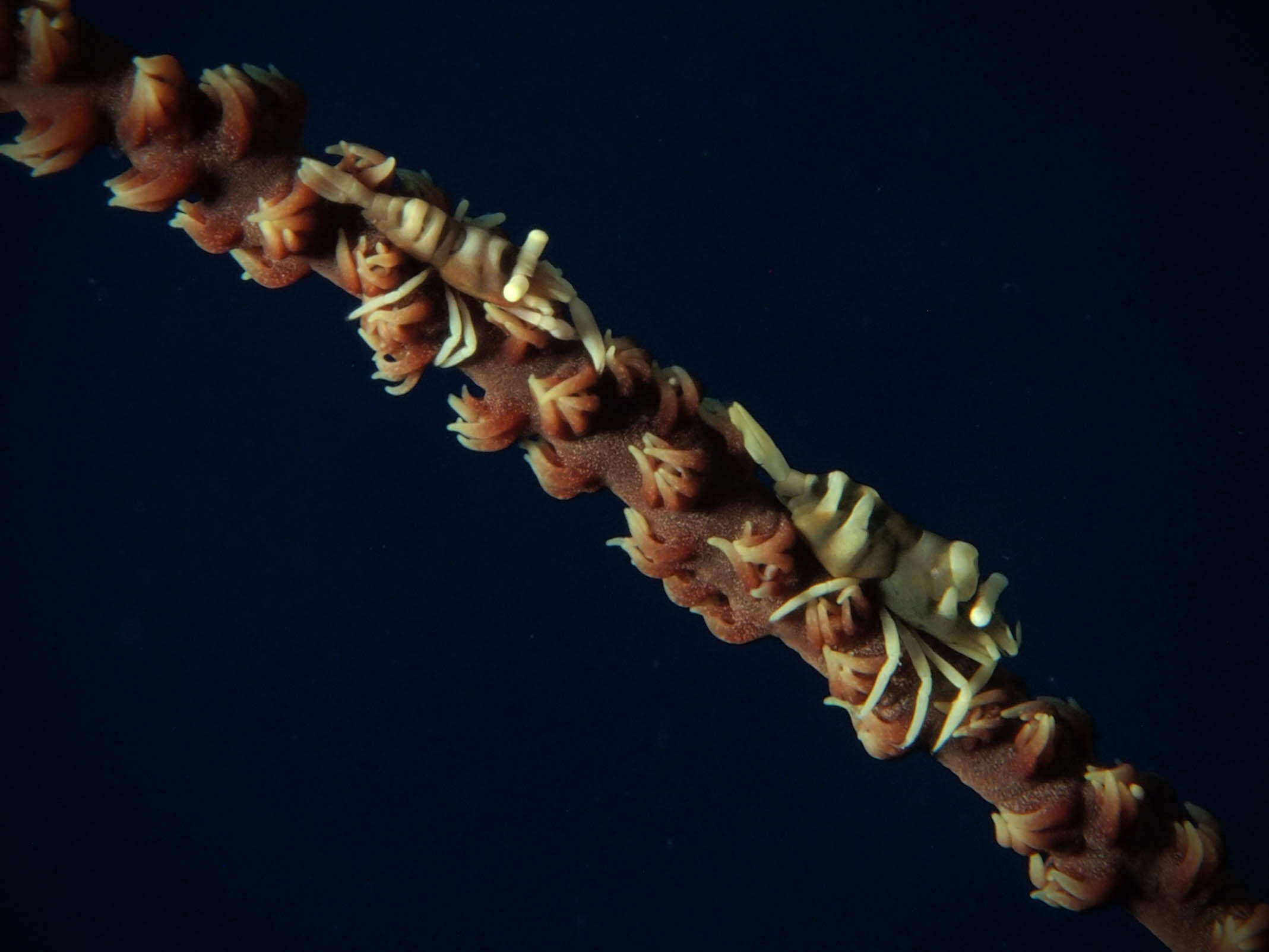
Deep corals skip the shallow recipe: no zooxanthellae chefs inside (no light, no chefs). Instead they hunt: branches spread, polyp tentacles cast like fishing rods; marine snow and morsels ride currents onto the arms; stinging cells freeze prey; mouthward they go.
How do abyssal animals cope with a forced crumb diet? Broadly, they follow advice your doctor would never give—yet down here it works: move as little as possible, waste no energy, keep metabolism low, grow slowly, live long.
Grandma, what a big mouth you have
Some abyssal strategists go large—wide mouth, big elastic belly—handy if non-crumby prey blunders by.
Stars of the show: echinoderms—spiny skins indeed. The gang? Sea cucumbers, sea stars, sea urchins—spiny “sea” crew that cracked the deep-sea code.
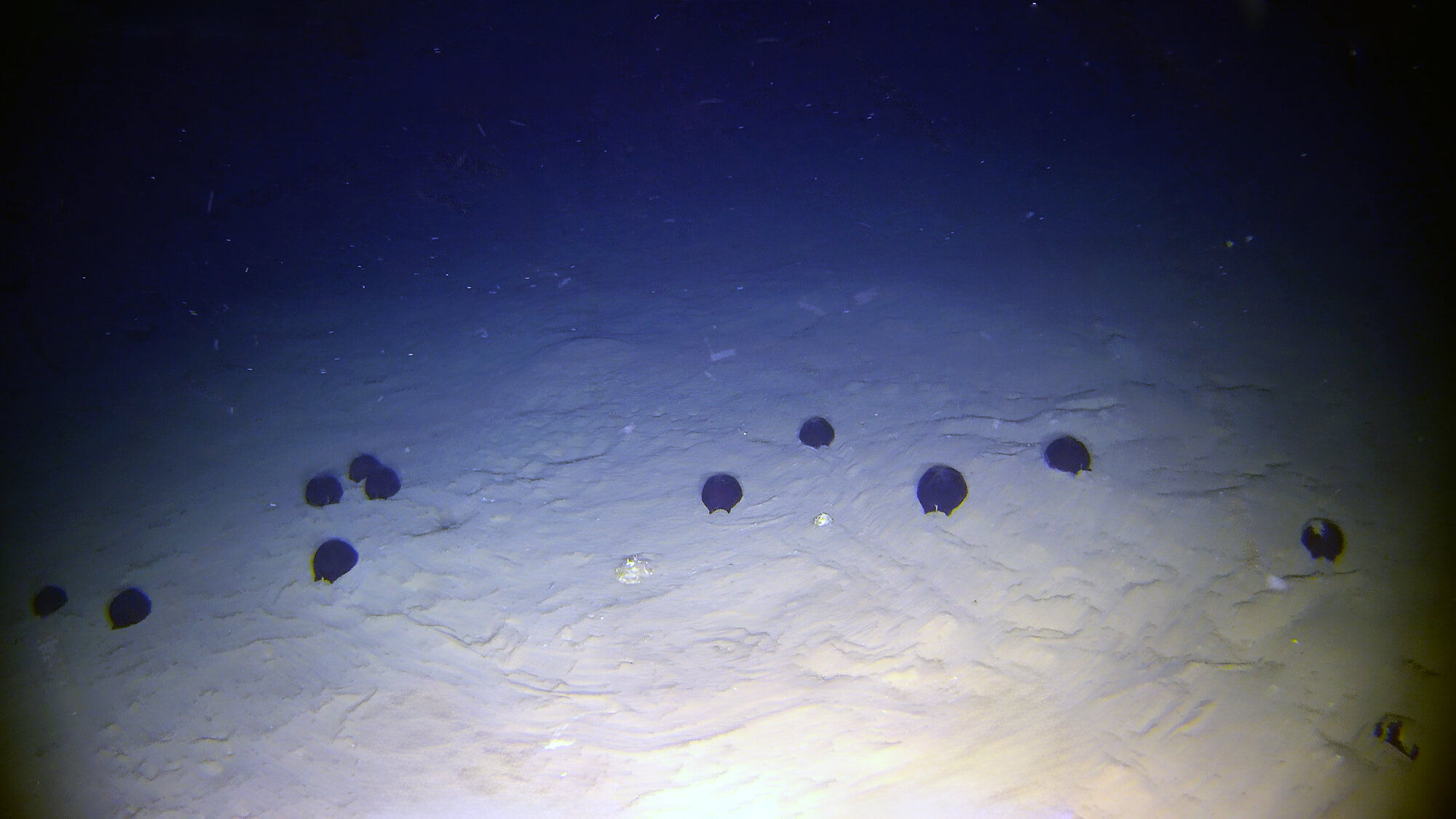
The “Eilat magic” heart urchin is one example: body and tiny openings fit a crumb diet (we covered crumbs). It burrows sand, aerates sediment, filters food—and becomes a chunky meal for the predator above.
So what have we learned? Inventive, adaptable, slow, “safe”—except safety is uncertain. Slow growth means high vulnerability; after harm, renewal may never come. The deep is remote—yet humans still reach in and meddle.
This gulf’s shape lets you “slide” from shallow to deep in minutes of sailing—blessed proximity, dangerous too. Recent history shows spilled oil, plastic, and industrial freight can devastate abyssal life. Keep monitoring; keep reserves—so the deep sea keeps its beauty and its work.
So what have we learned? They are inventive and adaptable; they “follow instructions,” growing slowly and “safely”—except nothing is truly safe. Because growth is so slow, harm hits hard, and after damage, recovery is slow to impossible.
For further reading

The 1993 fish survey
Deep-water coral research in the northern Gulf of Eilat:
How little we know about the deep sea floor
Next stop
The Beach
Discover the meeting zone between sea and land—a fascinating place where marine and coastal life come together