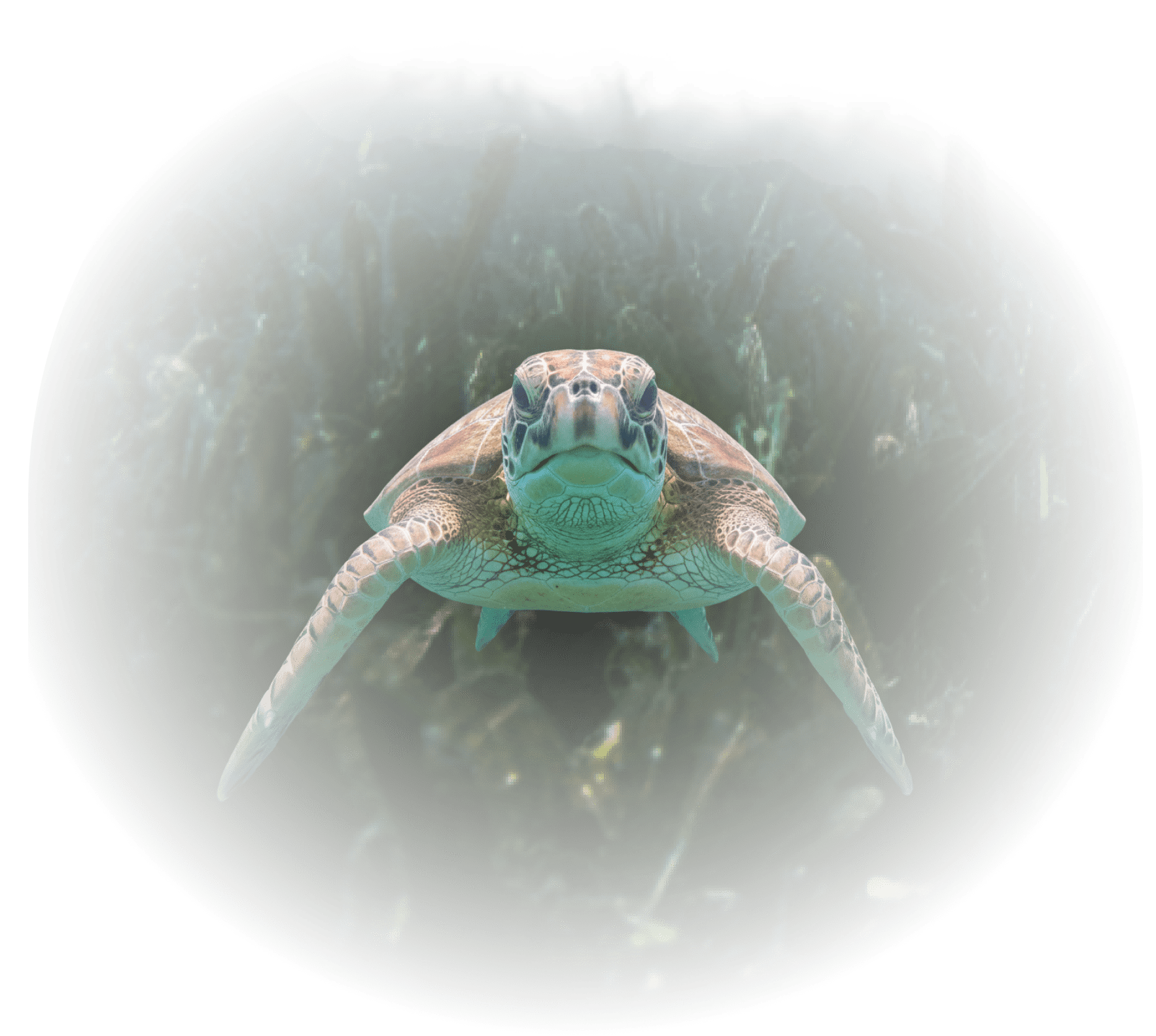
Seagrass
Take a look at the seagrass beds, swaying gently in the current—a busy hideout for stingrays, fish, and delicate creatures
Start scrolling

360° diving
Dive and discover the magnificent nature of the seagrass
what?
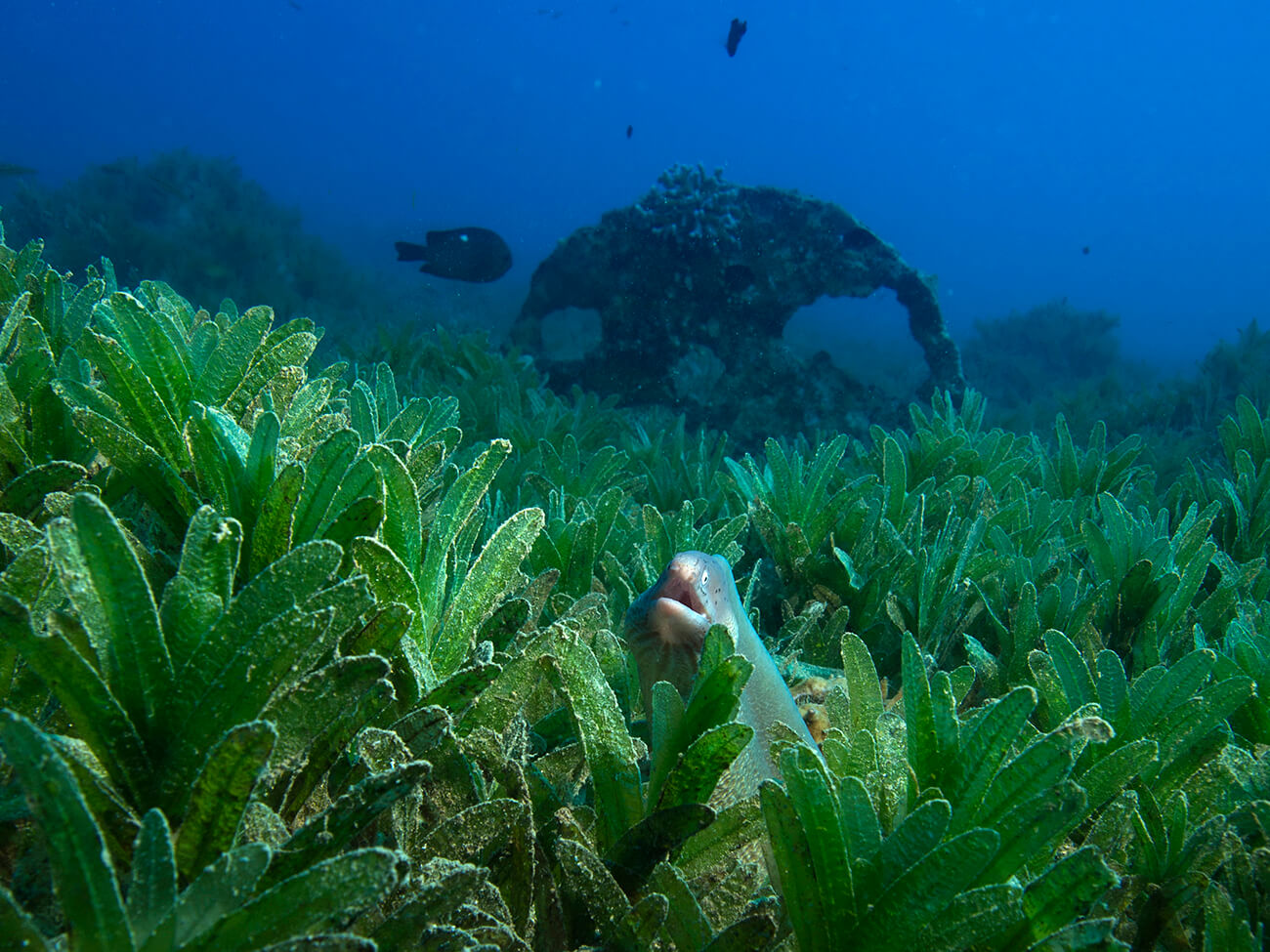
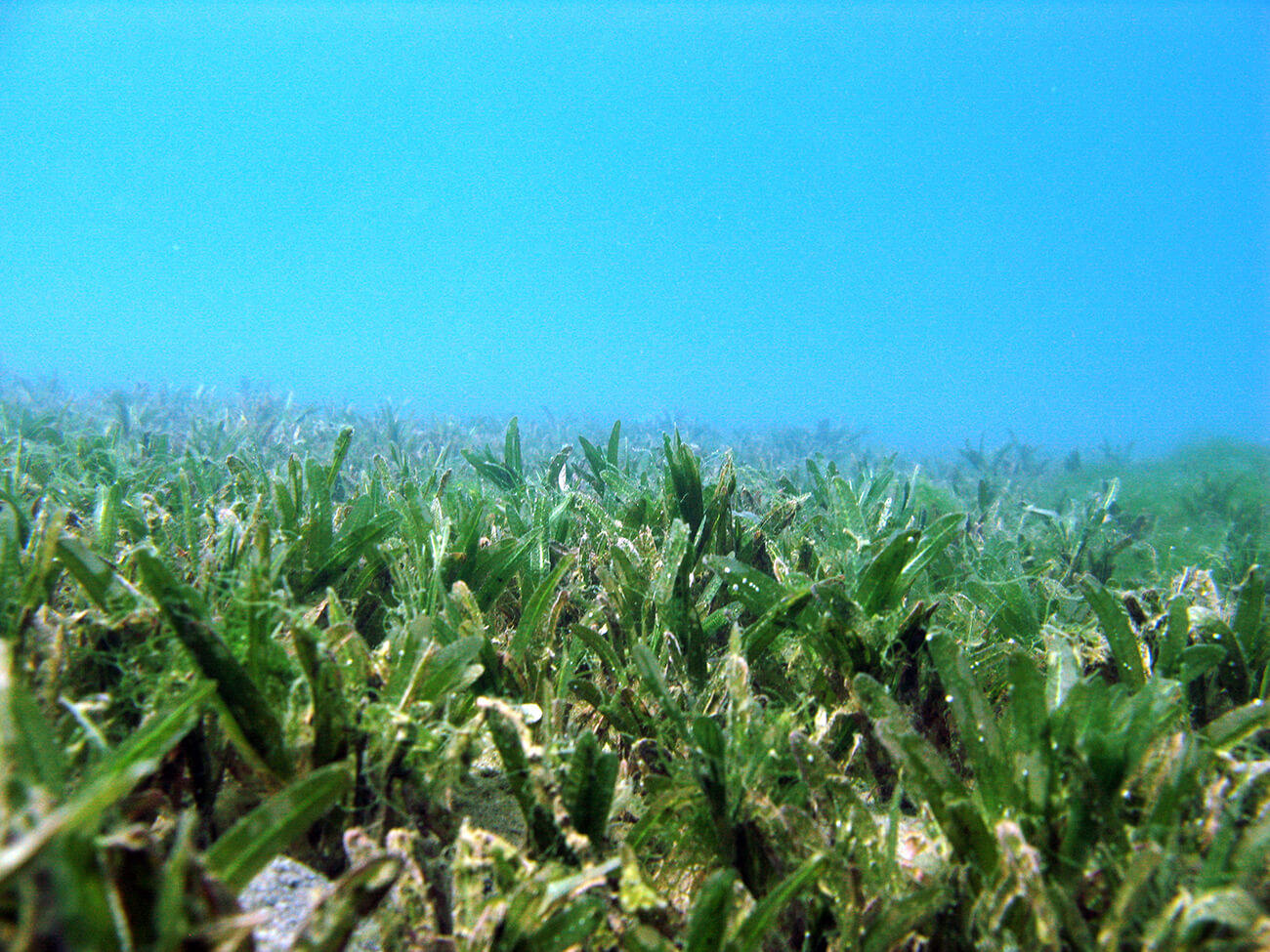
Mats of plants growing on the sandy seabed. Like daisies, seagrass has flowers and seeds and forms spectacular meadows. Seagrass beds are a complex, fascinating habitat: they serve as a nursery for fry and other creatures, and as a food stop for rays and sea turtles.
where?
Mainly off the northern coast, but also in selected spots off the southern coast. At depths from a few meters down to 40 meters below sea level.
who?
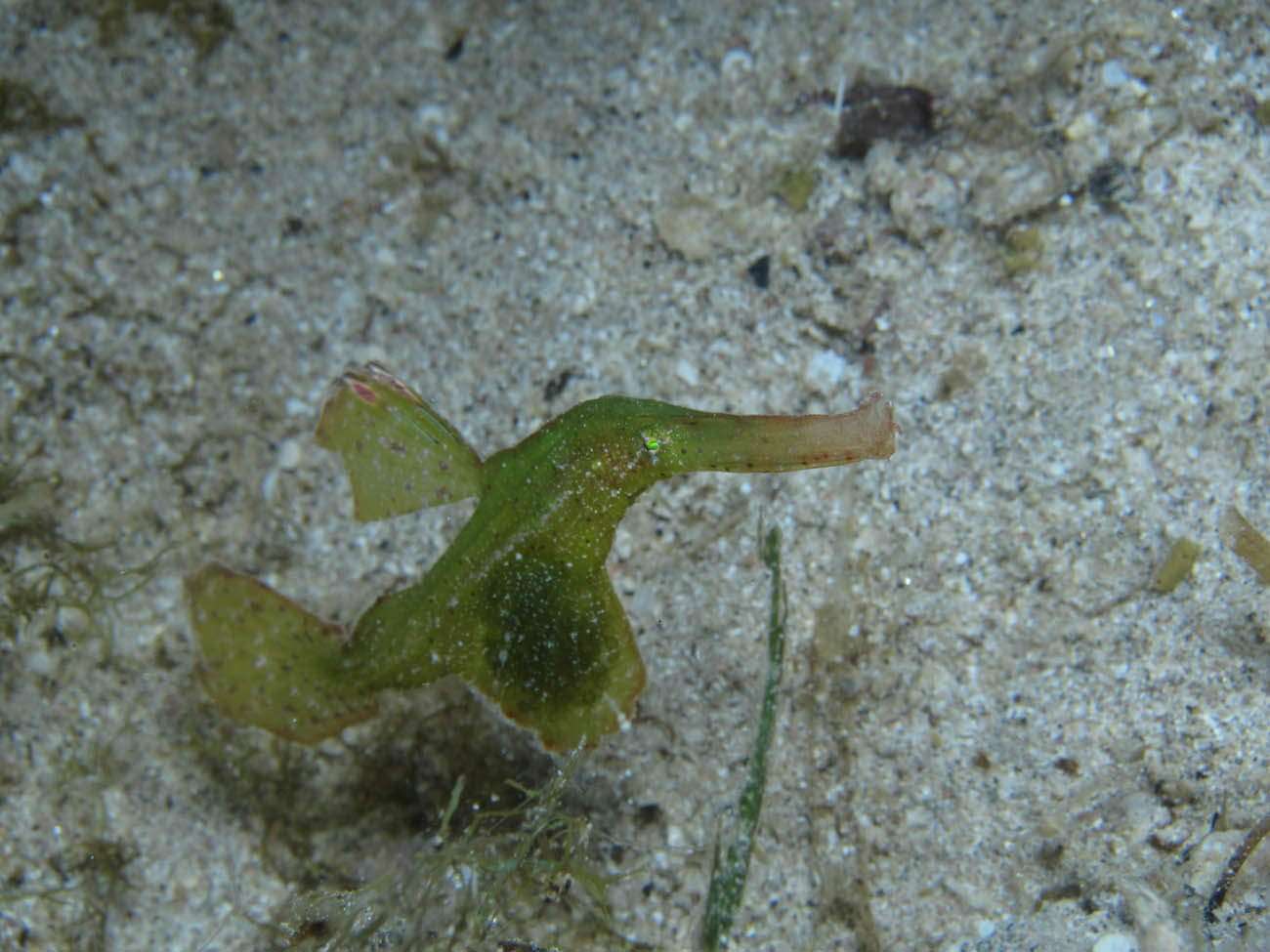
Jayakar’s seahorse, long-spine porcupinefish, bluespotted stingray, gray moray, and other tiny sea creatures—plus sea turtles that drop by for a visit.
What is it good for?
Seagrasses raise the next generation of marine life, lock away greenhouse gases, protect the shoreline and seabed, and are a draw for divers and snorkelers.
Who are you calling “just grass”?
Hand on heart—what pops into your head when someone says “grass”? Throw out the usual suspects: weeds, herbicide, pulling weeds… Admit it: seagrass sounds dull. After all, what is grass in the sea next to branching stony corals, sea anemones with all their arms, and colorful schools on the reef? It’s all grass.
So here’s the news for you: that “all grass” is what slips under the stretcher so this magnificent coral reef can keep existing. And sorry—the seagrass ecosystem is spectacular on its own; it has inner beauty; and what a résumé: environmental engineer, doctor, homemaker, nursery manager—in short, don’t look at the pitcher, look at the water inside.
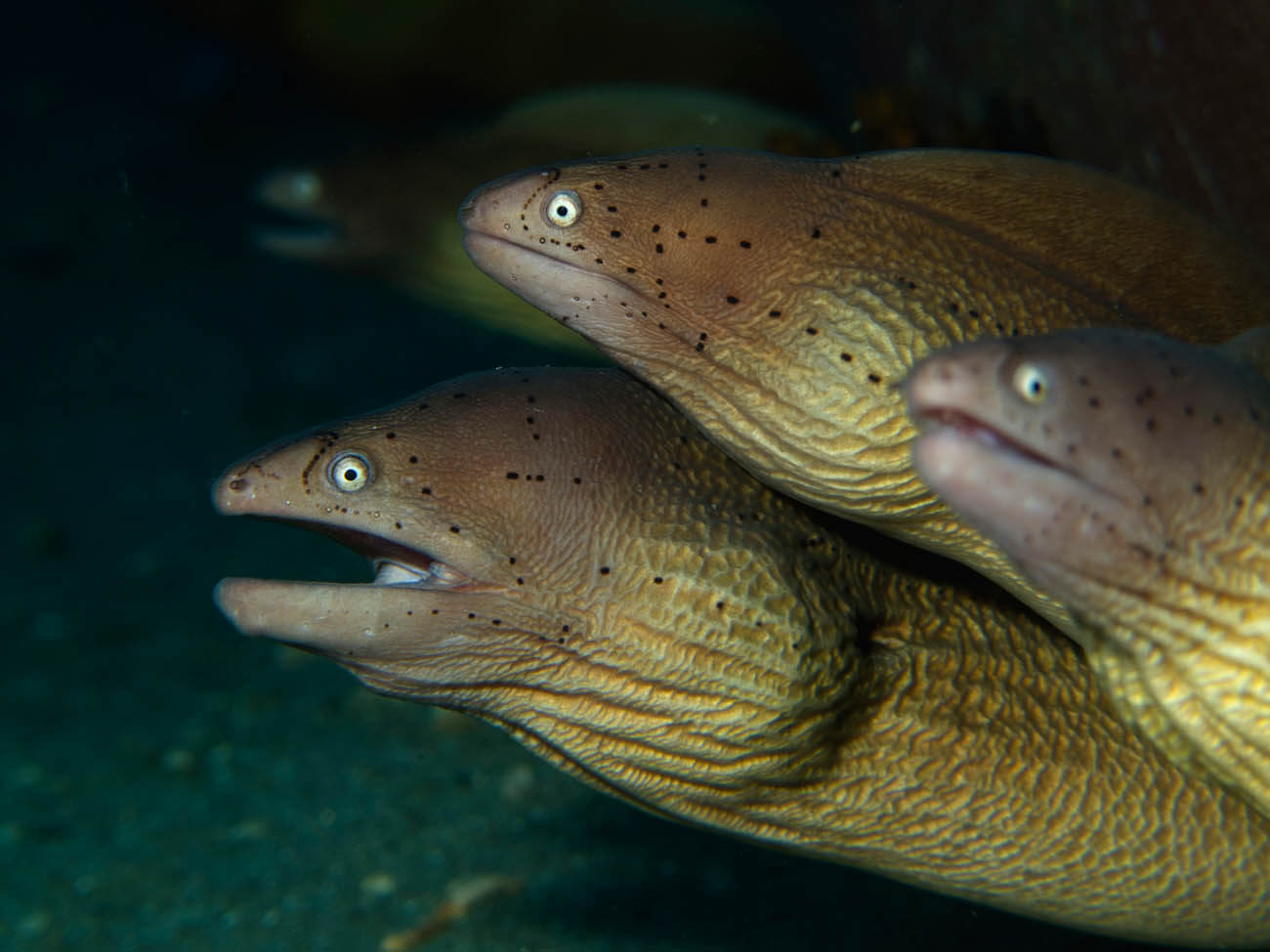
Welcome, then, to the underwater gardens you never knew. Here, where the bottom is sandy, the slope gentle, and from about four meters down you start to hear the song of the grasses: long blades dance with the water, sunbeams stroke them gently, colorful fish peek between the leaves, crabs crack clams, and a troupe of sock puppets—moray eels called gray morays—drifts slowly by. Here seagrasses build a special system that is savanna, rainforest, and sugar-free gum all at once. Worth sticking around.
The seagrass ecosystem is spectacular on its own—it has inner beauty—and what a résumé: environmental engineer, doctor, homemaker, nursery manager—in short, don’t look at the pitcher, look at the water inside.

Root work
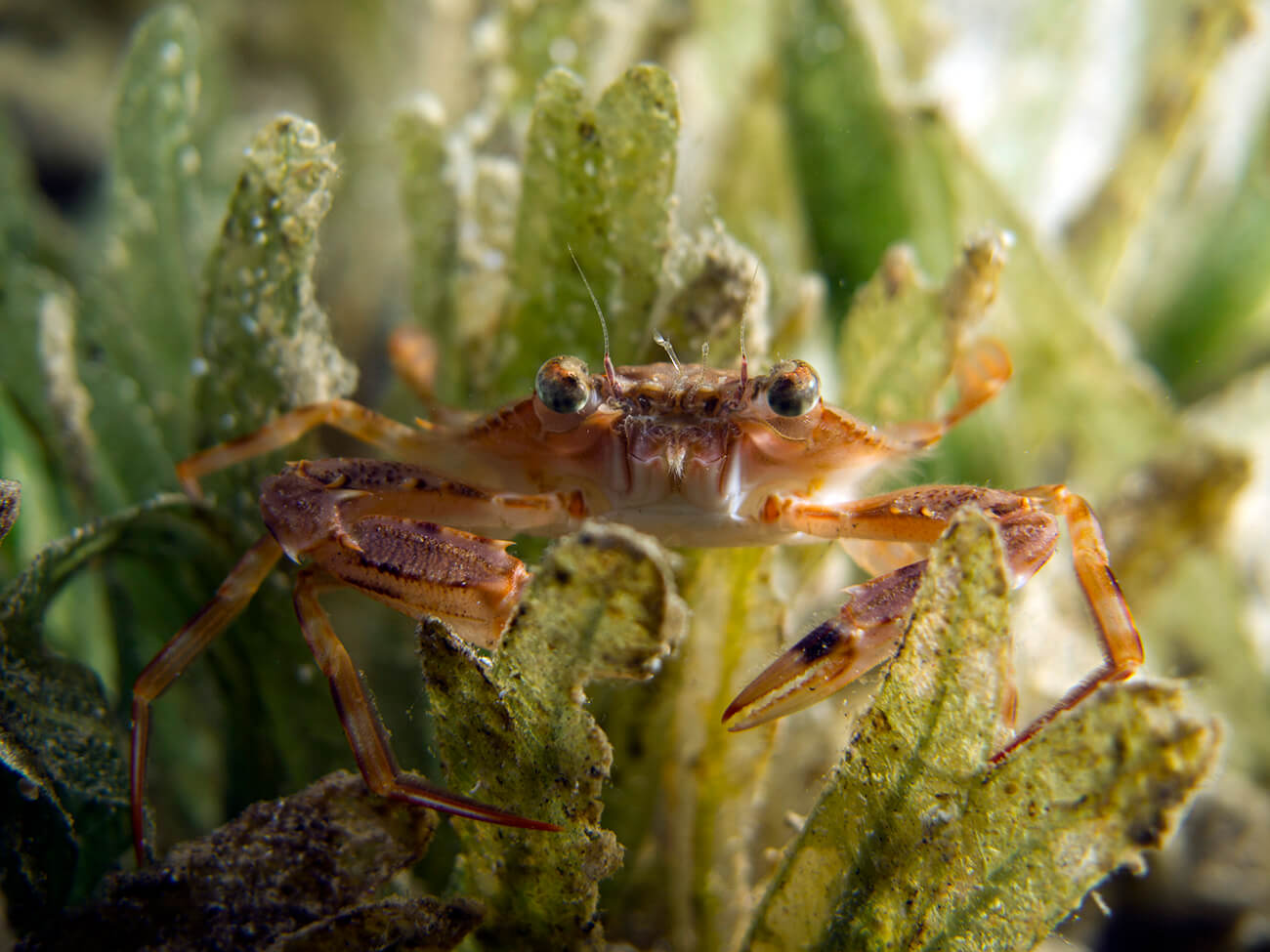
Let’s start at the beginning: seagrasses aren’t algae—they’re flowering plants. Like the anemone and the daisy, they have flowers and make seeds. They grow in relatively shallow water and are deeply rooted: their roots anchor in the seabed in a branching network. Their lovely leaves vary by species and place, but together they always read as a lawn or a patch of grass by the house after the rain. Jayakar’s seahorse, for example, is right at home in magnificent seagrass that carpets a respectable few dunams in green off Eilat’s coast—that “botanical garden” reaches tens of meters deep in the sea as well. The leaves and roots turn the meadows seagrass creates into a kind of savanna—much like the African savanna: animals hide among the blades, then ambush prey—or hide in the green from a predator on the prowl.
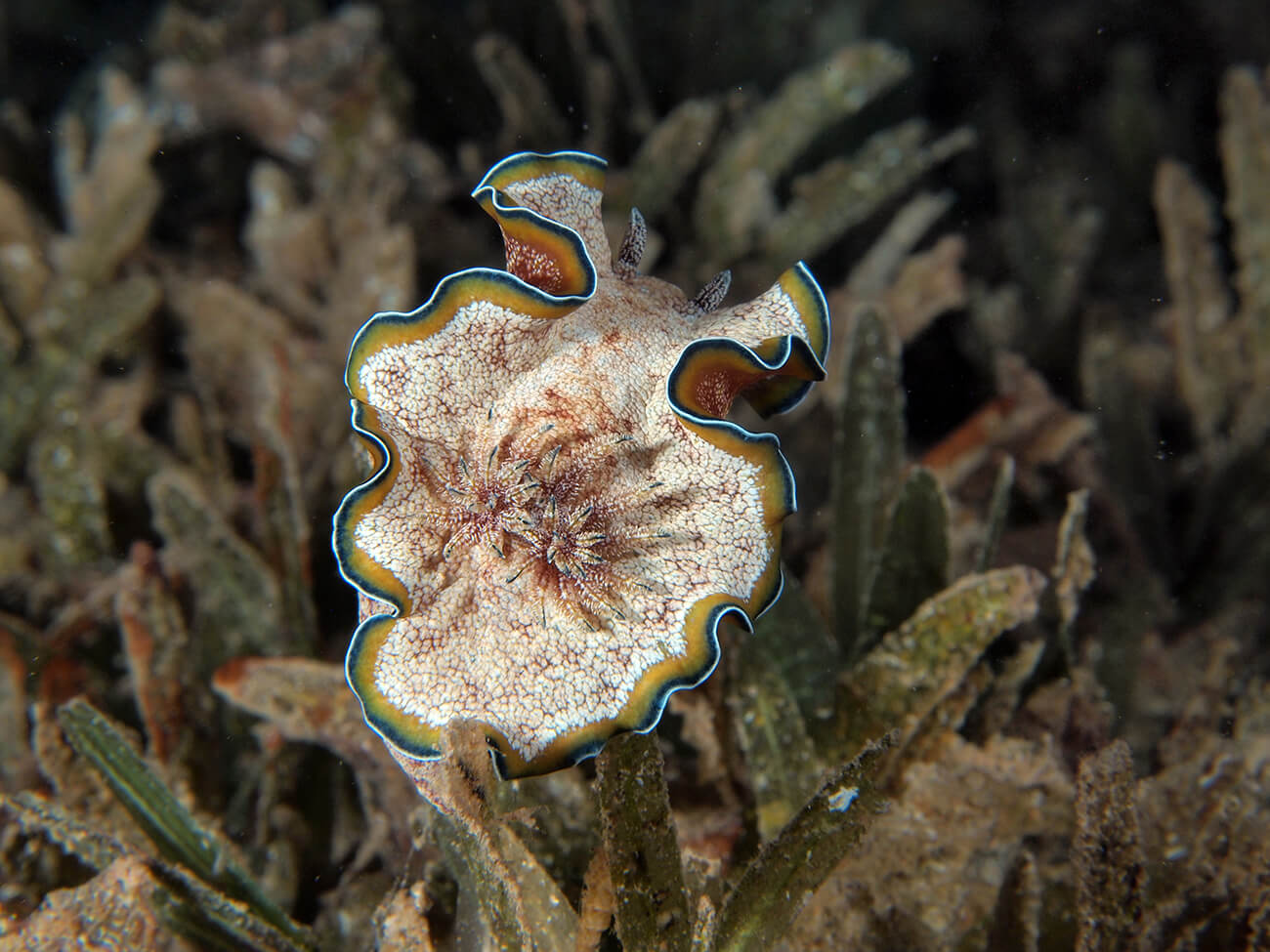
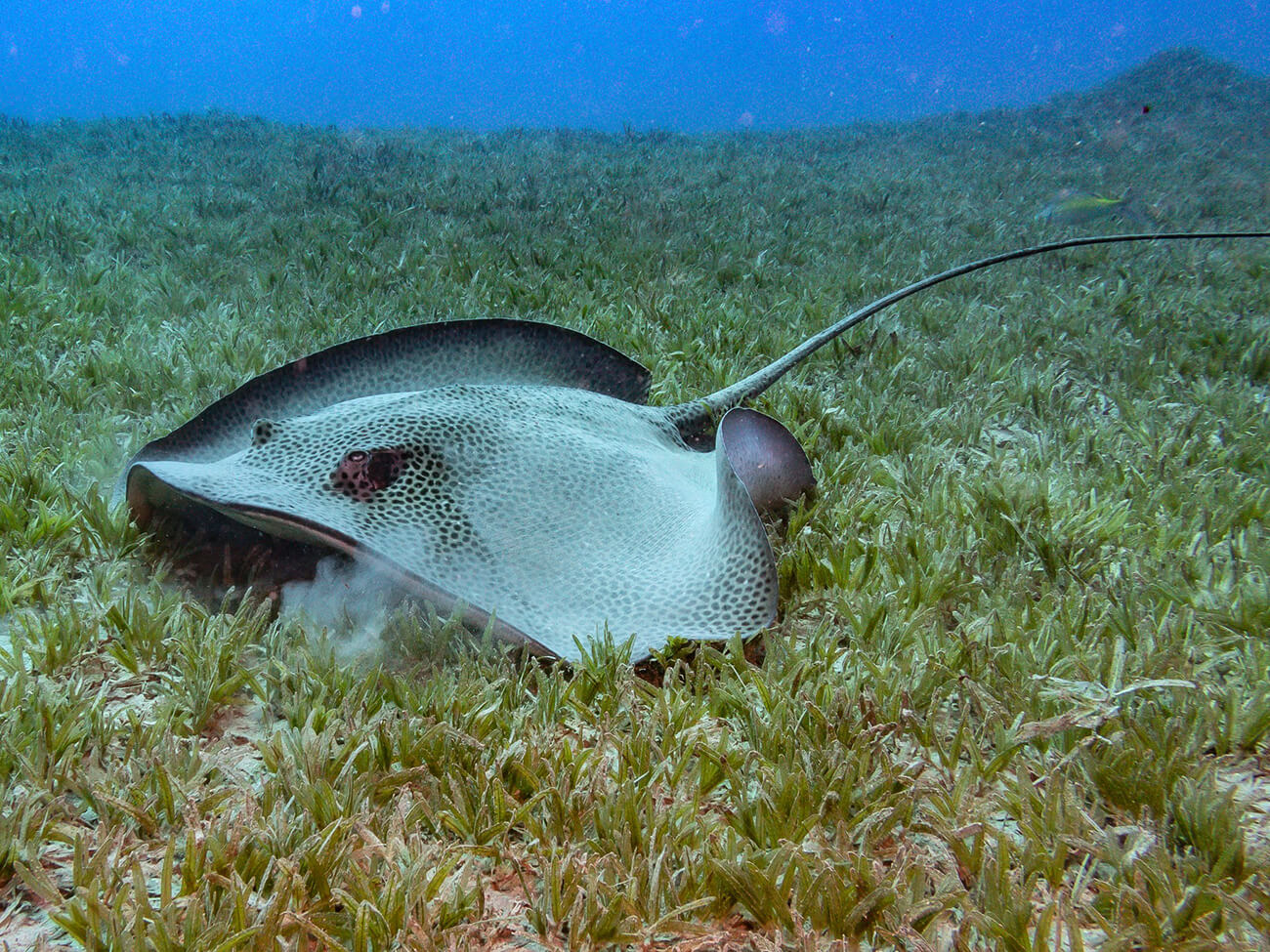
Some animals truly feel at home in seagrass, so you’ll find them mainly here—long-spine porcupinefish, for instance: it wraps its tail around the blades and hangs on, hunting plankton for a snack. Nearby, a pipefish ducks into the dressing room again and comes out in a seagrass costume. Pipefish are camouflage masters; with a thin, leaf-like body they’re almost invisible—great against predators, rough on Mom. Drop a little deeper and meet “the giant and the herd”: a bluespotted stingray, a huge kite-shaped fish up to two meters across, fluttering over the grass and rooting about for a mollusk or two. Of course its odds of a snack in the grass are high—when nudibranchs have wall-to-wall carpet to crawl on, they’ll show up, all right.
Tree-house kids
The seagrass system doubles as a foster home in its spare time: animals spend their first life stages in its safe shelter, and when they’re grown they spread their fins and head for the loud big city—the open sea and the coral reefs. Oh, the kindness.
Seagrasses earned their environmental-engineering diploma by building up the complex sandy habitat they grow in. How? They engineered the surroundings to suit themselves—a plant needs clear water so light can reach it, and seagrasses rolled up their sleeves: leaves plus strong roots roughen the bottom, cutting the wave energy that reaches the shore—like plant breakwaters under water. When wave energy drops, rock bits and organic matter in the water—sediments, in science-speak—sink, the water clears, and light can pass through.
Underwater meadows also soak up nutrients—chemicals that feed living things. Seagrass roots take excess nutrients from the seabed and use them to build their bodies. Why is that good for us? What’s wrong with nutrients? Because the Gulf of Eilat is a “desert” sea, naturally poor in them, and until now it did fine without extra loads. More nutrients can trigger heavy algal blooms that cloud the water and block sunlight from the coral reef. So seagrass gets top marks for water quality, and its trademark cool attitude helps keep algal growth in check—because, madam, you’re not alone: other friends here do photosynthesis too.
Like a wild plant
Who didn’t learn photosynthesis in biology? Recap: the sun supplies light; the air supplies carbon dioxide. The plant harvests solar energy, drinks water through its roots, stockpiles carbon, and gets to work—oxygen for everyone to breathe, carbohydrates for the plate. Seagrasses don’t skip the treat: they take up dissolved CO₂ from seawater—but they don’t just take it up; they store huge amounts—about 15% of the carbon in the oceans (!)—locking away a potent greenhouse gas that drives climate change. So with all respect to rainforests—and respect is due—the guardians of atmosphere and sea are our grasses.
On the same sour-sea note: high CO₂ raises acidity and hurts the reef—already visible in corals, bivalves, mollusks, and more. Seagrass, the ocean’s Orbit gum, pulls acidity down. Multitalented? Next time you floor the gas or book a flight—remember who’s balancing your carbon footprint. Just don’t call it weed.
It isn’t much fun watching the sea turn sour. High CO₂ in the water raises acidity and does a number on the reef—the damage already shows in corals, bivalves, mollusks, and more. Along comes seagrass, the ocean’s Orbit gum, and pulls acidity back down. Multitalented, we said?
Picture this
Worldwide, seagrass beds have long been a paradise for divers, snorkelers, and macro photographers visiting these underwater gardens, marveling at the animals hiding there. Tourism aside, new studies are sprouting after the rain, uncovering seagrass’s medical potential. Early work found a compound in one seagrass species that knocks down disease-causing bacteria. A long road to the pharmacy—but seagrasses aren’t waiting: they cut exposure to pathogens in humans, fish, and invertebrates. A study a few years back found lower disease rates in fish and corals near seagrass than away from it, and human pathogens showed up less often in those areas. What do you know.
With a résumé like that and green hair in the current, it’s odd how little research targets Eilat’s seagrass. The world has long valued seagrass and its good neighbor policy—coral reefs, sandy bottom, building committee. Hence big protection efforts—and plenty of reason: the sea has become a handy dumpster and a museum of underwater archaeology. Tracking Jayakar’s seahorse in the gulf, researchers found “clearings in the forest”—all around sunken cars and a scuttled ship.
Eilat’s seagrass sits on the northern shore, right opposite the mouth of the Kinet Canal—the same canal that feeds the gulf tasty extras: desalination brine loaded with nutrients, farm runoff from the southern Arava—also nutrient-rich—and aquaculture effluent—rich in… you get the idea.
But—plot twist! In recent years Eilat’s seagrass beds are expanding; the plants look healthier than years past. Let’s keep it that way.
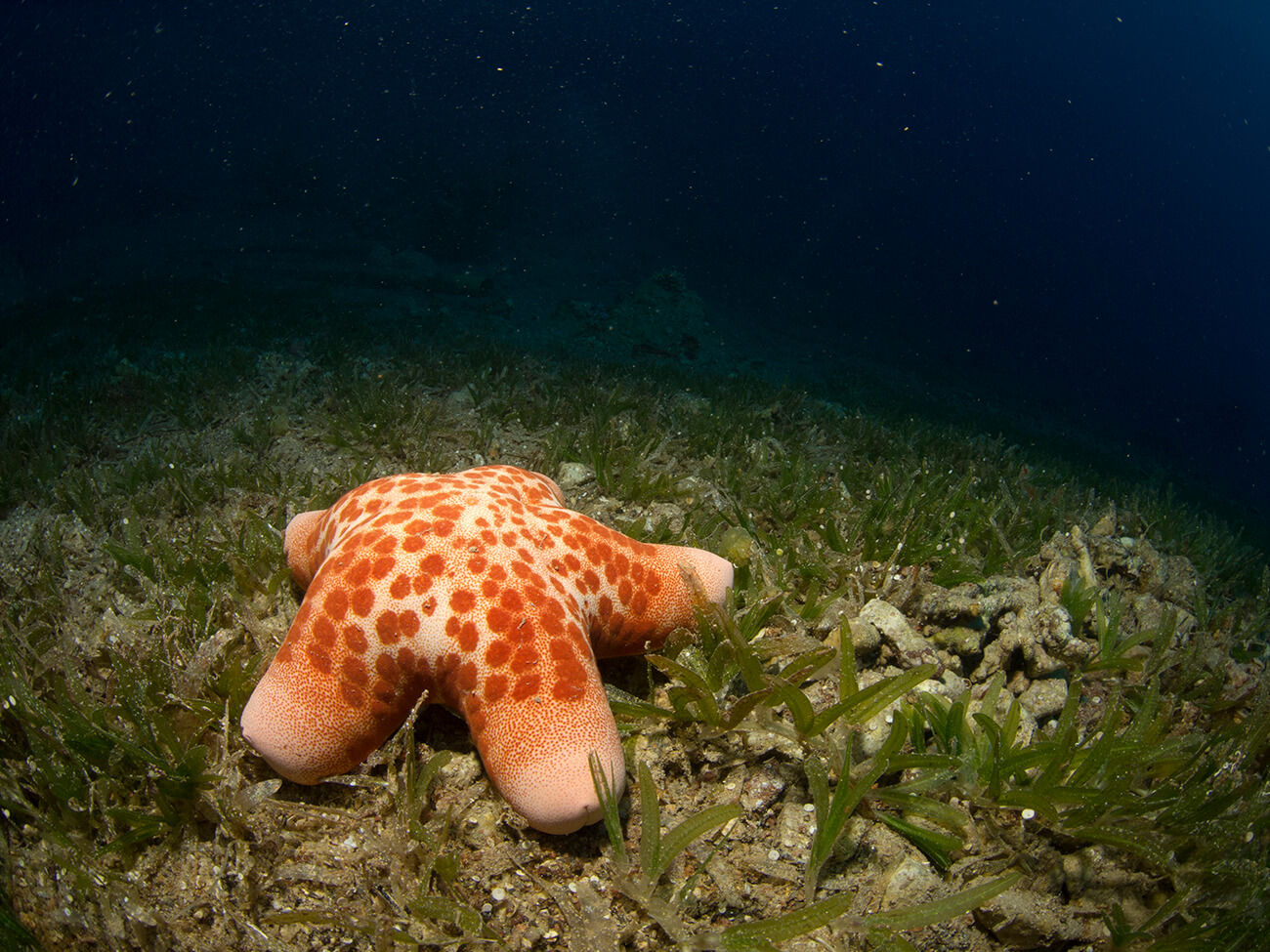
How? An initiative is advancing to protect seagrass beds as the gulf’s first marine national park. Such a zone would give the public a prime dive-and-snorkel asset, shielded from fishing and other harm. If seagrass is a standalone attraction worldwide, why not here? Protecting the beds safeguards this vital habitat—squid, seahorses, octopuses, sea turtles, crabs, urchins, snails, gorgeous nudibranchs, sea stars, and the rest of the “grass celebrities”—and supports water quality and neighbors like coral reefs.
With a résumé like that and green hair streaming in the current, it’s unclear why so little research has been done on Eilat’s seagrass. For decades the world has recognized seagrass’s contribution and its excellent neighborly relations—with coral reefs, the sandy bottom, and that guy on the building committee. So major efforts go into protecting it—and of course there’s plenty to work with.
For further reading

Ecology and traits of seagrass
Natural substances and their potentially decisive contribution to human health:
https://books.google.co.il/books?hl=en&lr=&id=uet0dSgzhrsC&oi=fnd&pg=PP1&dq=sea+grass&ots=vH9duLu3Jn&sig=6jIJcUzoWncNKv6dG21ICImNFck&redir_esc=y#v=onepage&q=sea%20grass&f=falseSeagrass as a carbon sink
Seagrass reducing exposure to pathogens in humans, fish, and invertebrates
Next stop
The Sandy Bottom
Peek into the world hidden beneath the sand—home to unique creatures adapted to life on the seafloor