The Open Sea
Discover the open spaces of the sea, home to migratory species and dynamic marine life
Start scrolling

360° diving
Dive and discover the magnificent nature of the open sea
what?
In the upper layer of the open sea—the “photic” zone where sunlight penetrates—lies the largest habitat on Earth. There is no stability and nothing to cling to, yet the extraordinary creatures that live here have found ways to keep moving and survive the challenges.
where?
In the water column above the seafloor, down to about 200 meters below the surface.
who?
Tuna, barracuda, dolphin, hammerhead shark, whale shark, sailfish, and of course the backbone of the chain: plankton.
What is it good for?
In the photic zone runs the giant photosynthesis factory that lets us breathe. Carbon dioxide is fixed there—instead of making trouble in the atmosphere—and the food chain is built from small to large.
To the exciting, wild sea
Come to us, to us, to the sea! To the passionate, wild sea. To this sun, To the strong winds, For the sea is open to us all.
(Dan Almagor)
The biological magic of the oceans
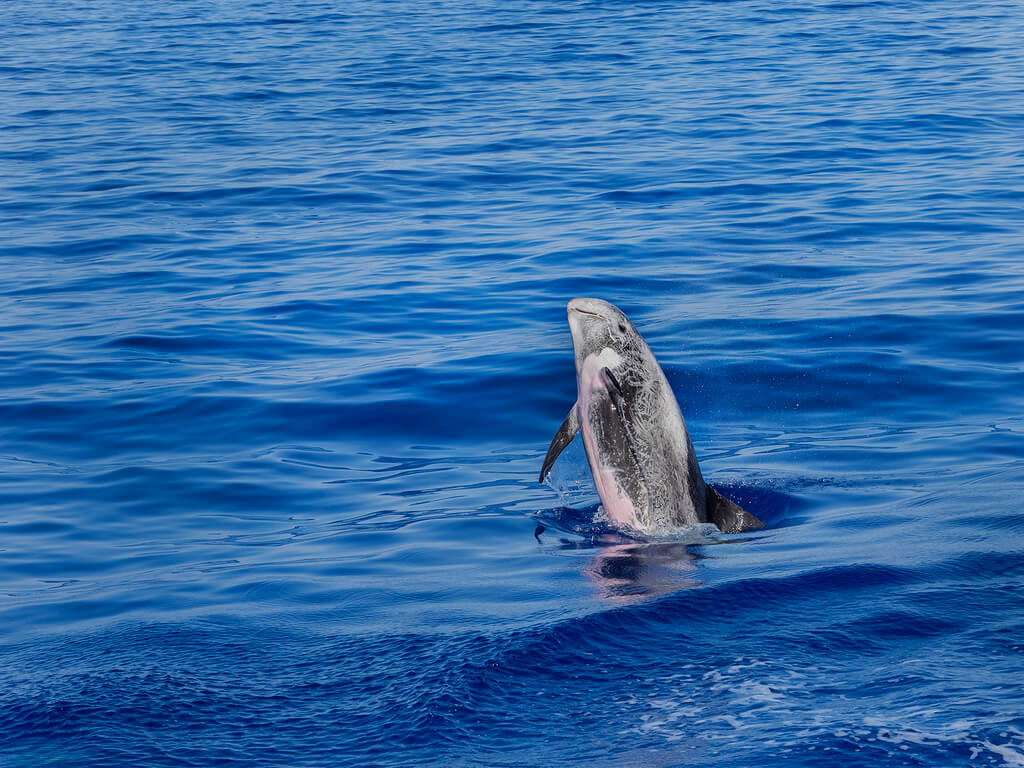
You enter the water and start swimming toward the open sea. The popsicle cart, the plastic chairs, and snorkels poking from the surface fade away. A hundred meters out, then another. One look through the mask—you no longer see the bottom, only clear blue water. Blue above, blue below, nothing to fix your bearings to. You are handed over to nature: fast currents, tossing eddies, strong winds, unstoppable storms. A pod of dolphins appears from nowhere, cuts past you, wheels in and out, and vanishes. A black shadow slides beneath you. A shark? A cloud of fleeing fry slips away from the shadow.
The sky reddens and darkens, and then it begins: billions of creatures rise from the depths—a quiet but frantic traffic. Tiny copepods, fish larvae, zooplankton that hid deep by day and surface at night to graze microscopic plants. They are not alone—their predators follow, and predators of predators. Everyone tries their luck at the mass buffet on the surface. At first light survivors slip back to depth to hide, then sun again, then a big fish chasing a shoal of small ones. Then stillness—the life cycle of the open sea.
Welcome to the largest habitat on Earth by area: an immense blue space lit by day, dramatic around the clock. The "photic" zone—so named by scientists—comes from the Greek for light: the upper water layer sunlight reaches, down to about 200 meters. Even if this blue 3D infinity looks empty, the oceans' biological magic happens here: the photosynthesis works that feeds the whole food chain, supplies oxygen to life on Earth, and backs every other breath you take.
What about rainforests on land? In sheer productivity, this vast marine factory rivals the terrestrial one—with flair to spare. Here, billions of invisible drifting plants turn sunlight into sugar; they draw carbon dioxide from the sea and release at least half the oxygen in the atmosphere for Earth's inhabitants.
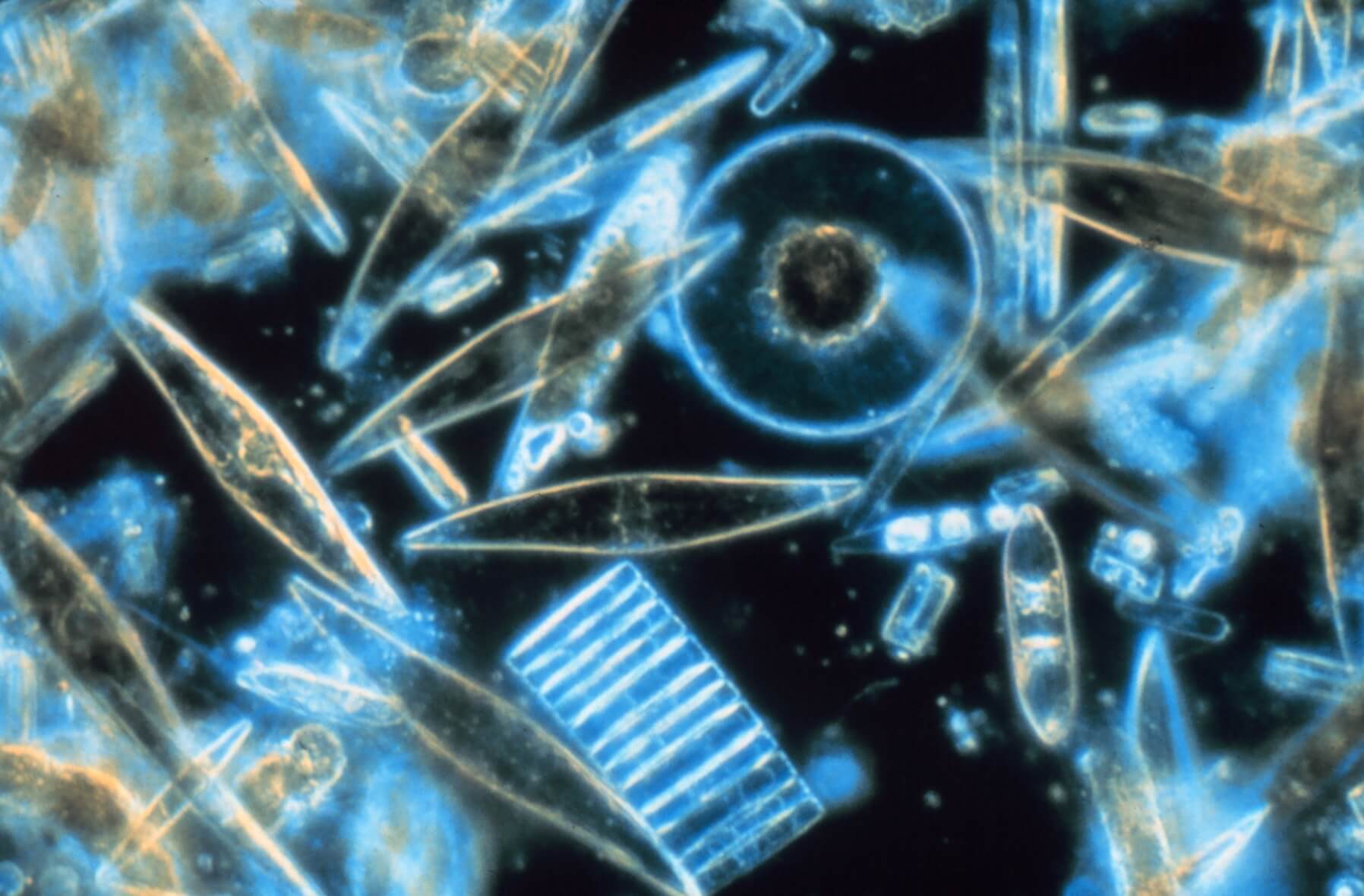
The whole web of life is woven in the sunlit layer—and not as a slogan. Phytoplankton, those microscopic photosynthesizers, are the foundation of the marine food chain: they feed zooplankton, which feed small fish, then large fish, then whales and sharks—in short, a marine "Had Gadya," and it all begins with plants you cannot see.
Worth stressing: many animals roaming the photic zone are not microscopic—quite the opposite. If you must cross huge distances for food, save energy in the water, and dodge predators, being big pays off. At that scale, whales, sharks, dolphins, and other giants built for endless motion live wide-roving lives far from human eyes.
But pause this pretty picture—oxygen, food webs, world peace—and ask how hard life is in the open sea's photic layer. First, you are in the open ocean: not one stable moment; everything is, well, open—calm one instant, slammed by currents the next; sucked into a swirl from below, then torn by gale winds. You cannot grab hold: no shelter, no coral crevice, no tree branch. Remember: from zooplankton to blue squid, every creature is someone else's traveling buffet—where will you hide? Sunlight powers the whole photic zone, yet it offers no cover for camouflage—nothing like ducking under a sunshade. All is bright and exposed, and your predator is waiting. Another thing—are you a sponge? A coral? Looking for hard ground to build on? Forget it. In the photic layer everyone swims, floats, or drifts. No sitting tight. Grab and go. And food? Remember zooplankton near the base of the chain? Always couch-surfing: as a speck you are forever at the mercy of tides, currents, and seas. You ride the daily migration—now here, now leagues away. You never quite know where the cafeteria is today; coordinates are "somewhere" in the upper layer. Not a recipe for fortress walls. In short: roving cafeteria, no hideout, no handhold, no stability—not simple.
The glass house
What do you do? Invent solutions. No shelter? Camouflage. Many open-ocean animals have evolved astonishing camouflage—because even as microscopic plankton with the entire food chain on your back, you still do not want to be eaten.
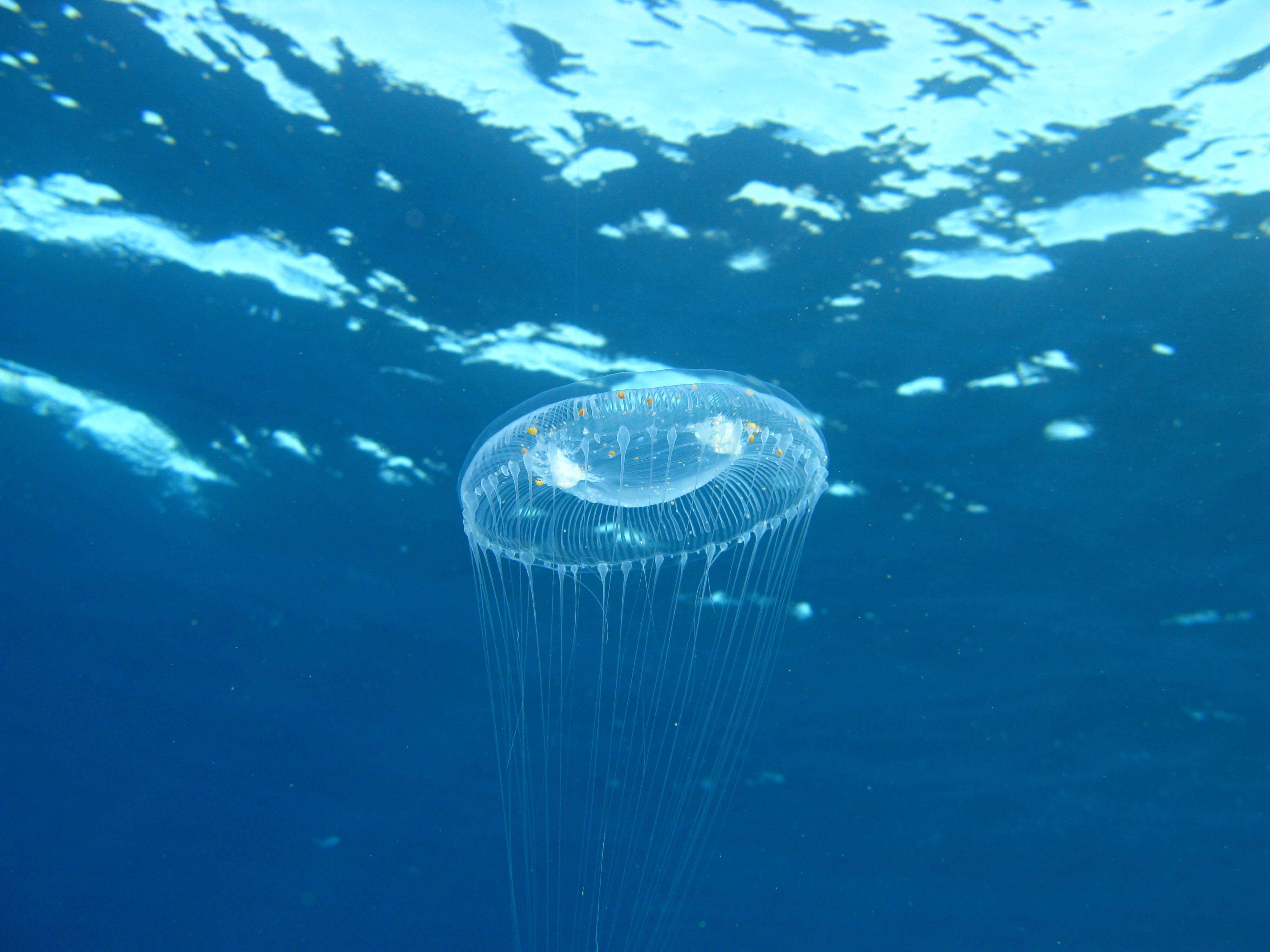
Many went low-tech: a fully transparent body that vanishes into blue water—copepods, jellyfish, tiny shrimps and other zooplankton, glass-clear fish, glass jellyfish with gelatinous bodies for silent drift and perfect disguise, young squid that favor the photic zone.
Others did the physics homework: red light is swallowed first as you go deeper. In the deeper photic layers, red pigments read as black invisibility—several shrimp species built a career on it.
What do you do? Invent solutions. No shelter? Disguise yourself. Many open-ocean creatures have evolved amazing camouflage—because even if you are tiny plankton with the whole food chain on your back, you still don't want to get eaten.

Squid are the chameleons of the open sea—they shift color fast using pigment cells called chromatophores. The makeover artist can also redraw patterns—spots, stripes, anything goes—camouflaging efficiently, dodging predators, and signaling to its kind; those pattern shifts are partly its face and its chat.
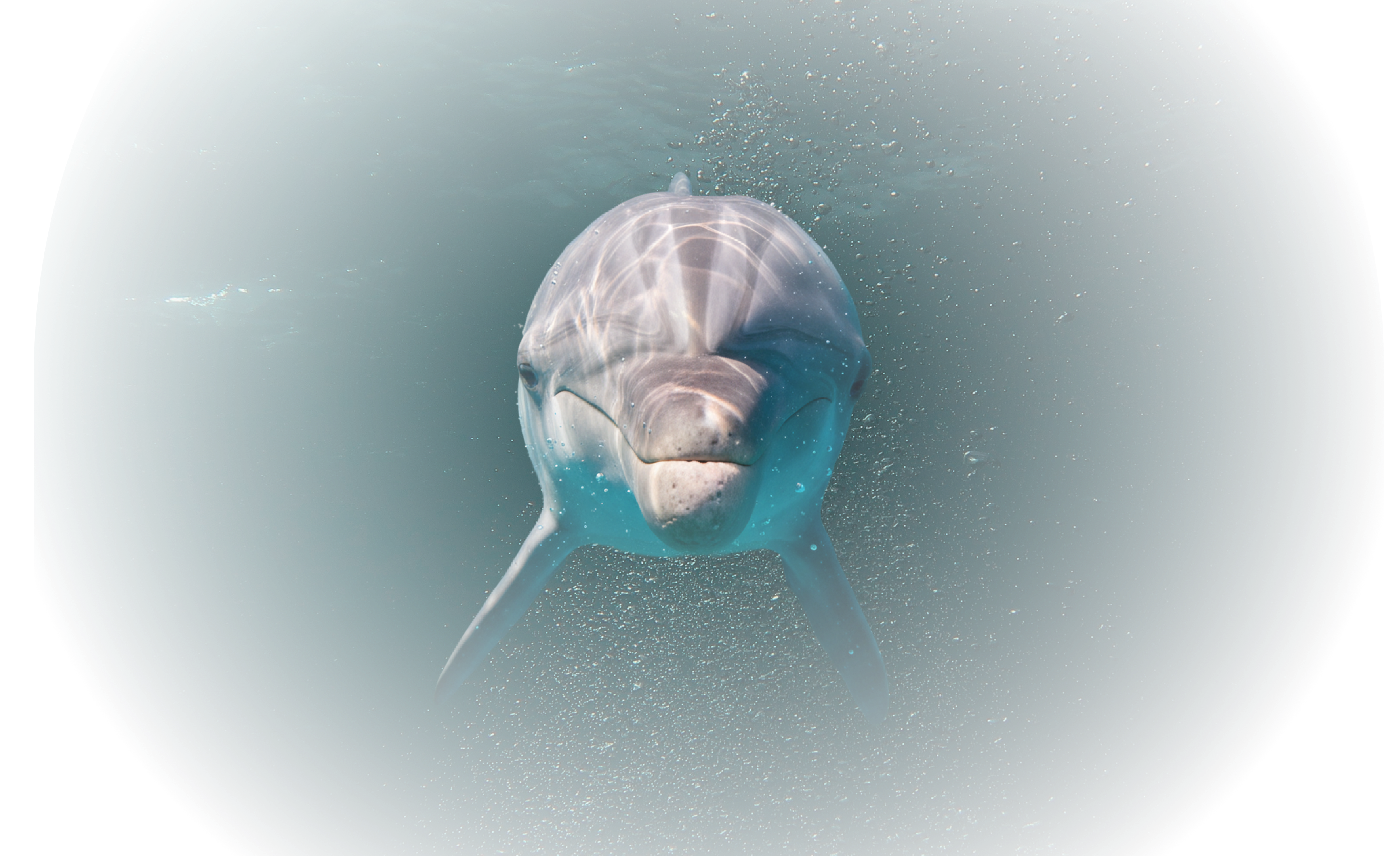
While they play hide-and-seek with color, others less suited to that playbook need another answer. Dolphins carry precise navigation and targeting via echolocation—an original trick not tied to sight. They click and whistle at high frequency (fine in the open sea, less so in your living room); echoes bounce back from objects around them.
When the echo returns, the dolphin does the math—distance, direction, size. With a mental map of space, they can navigate, sense risk, find food, and operate in the dark. Small wonder they look pleased.
Food, bring on food
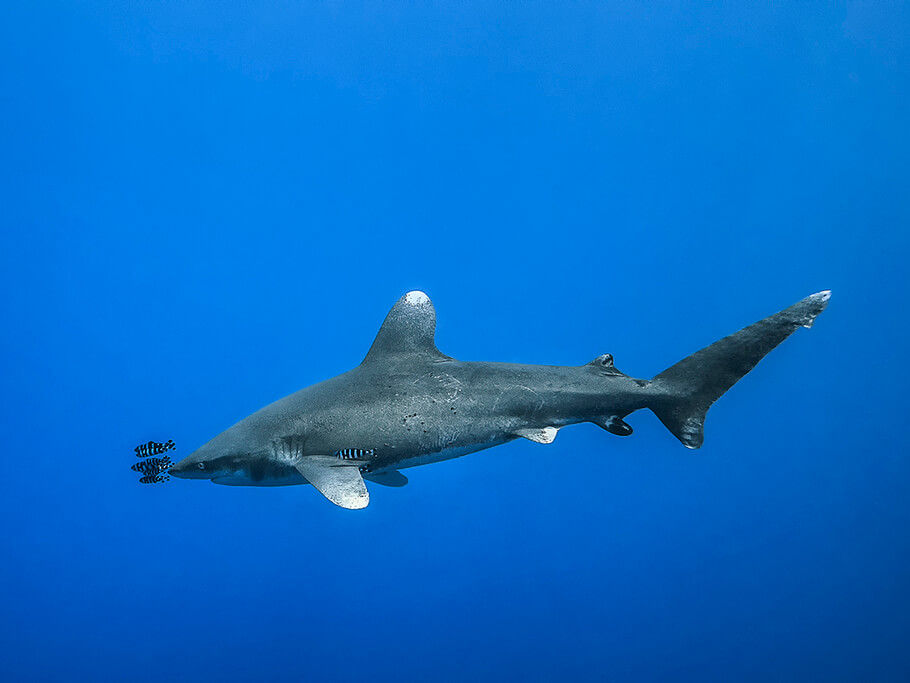
Hitching a ride on dolphins' acoustic genius is one of the open ocean's iconic sharks—the oceanic whitetip. Long, limb-like fins gave it its name; it learned to keep its "hands" in its pockets.
Why sweat if dolphin pods do the work? Pods course in big schools offshore, clicking and whistling; the shark, gifted with fierce hearing, puts two and two together—something interesting over there: squid, carrion, scraps—and if needed it steals the prize.
It does not dine entirely for free—the whitetip already "contributes at the office": swimmers often see it escorted by a striped, silvery pilot fish, an all-ocean navigator that snacks on leftovers and enjoys protection without paying rent. The thief who robs a thief goes free.
Another opportunist is the sailfish—among the fastest, most spectacular fish in the sea, with its great sail-like dorsal fin. If you are a tuna or a small mackerel and it raises that sail, do not cruise the open sea with it. It lowers its long, pointed bill? Run, Forrest, run. That bill tags prey before dinner is plated. If a baitball forms, the sailfish arrives at the insane speeds it is known for—it has cleared 109 km/h.
One of the photic zone's great windfalls is the nightly show in every ocean: vertical migration. By biomass, it is the largest animal movement on Earth—countless creatures leave the quiet dark "basement" to ascend to the surface cafeteria. Who shows? Zooplankton, fish, squid, jellyfish, whales, sharks, and more.
What waits upstairs? Phytoplankton hug the surface because they need sunlight for photosynthesis. Who else? Everyone coming to eat phytoplankton—and feed the predators. Zooplankton graze the micro-plants, turn into rich protein, then get eaten—fueling those above. And no, it is not matryoshka dolls—small inside big inside bigger. It does not work that way. Take the whale shark that sometimes visits our waters: up to 20 tons, largest fish on Earth, yet it waits for the nightly migration to filter copepods, sip mollusks, fertilized eggs, and day-old fry. We expected more.
It isn't a Russian doll: a small fish inside a bigger fish inside a bigger one. It doesn't work that way. Look at the whale shark: considered the largest fish in the world, and in the end it waits for the nightly migration to filter copepods, sip mollusks, fertilized eggs, and day-old fry. We expected more from it.
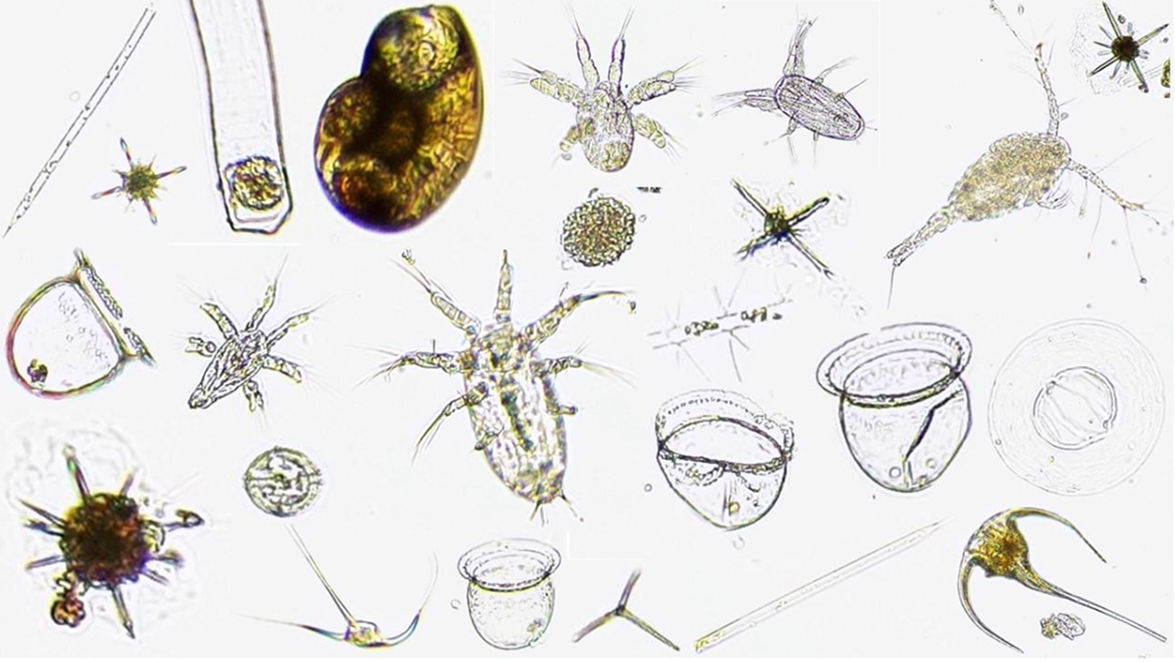
Relying on senses to find food and dodge danger suits the hammerhead shark—if you do not know the fish, you know the nickname "hammerhead." Its head really is hammer-shaped, eyes at the sides for wide view—including downward—a plus when you live with a hammer between your eyes.
Like other sharks and rays, it has a practical extra: electroreception. Tiny pores on the snout sense shifts in the electric field and pinpoint living prey that generate weak currents—squid and fish. It locks on, they bolt, evening and morning, and the open-sea cycle keeps turning.
Near and far
The cycle keeps turning—and delivers a huge ecological gift: the sunlit open sea is the planet's blue lung. Fresh studies show how massive phytoplankton oxygen flux to the atmosphere really is. Phytoplankton keep giving even at life's end—when they sink and decay they form marine snow, plankton particles drifting to depth. All the carbon dioxide they fixed rides down to the ocean floor, turning seabed into a vast carbon vault that stays out of the atmosphere and limits warming. Without that burial, atmospheric CO₂ could be nearly double.
The photic zone, as the base of the marine food web, underpins human food security: over three billion people depend on seafood protein—and now we see where it starts.
Here lies the rub: the open sea feels far from people, yet boats, storms, surf, and wind still deliver unwelcome cargo. Microplastics reach the open ocean, plankton ingest them, and we know whose dinner plate that visits. Key food-web fish are hunted—some for sport. Underwater noise from drilling and shipping scrambles everyone who works in sound (dolphins—remember?). Warming water hits phytoplankton, and on it goes. So do not say "it's far, it's open, none of our business"—everything connects. That is one reason marine reserves must be three-dimensional, guarding seafloor and the water above, one linked system. Let's protect the open sea—for us.
The sunlit region of the open sea is the planet's blue lung. New research shows how enormous and significant phytoplankton's oxygen release to the atmosphere really is.
For further reading

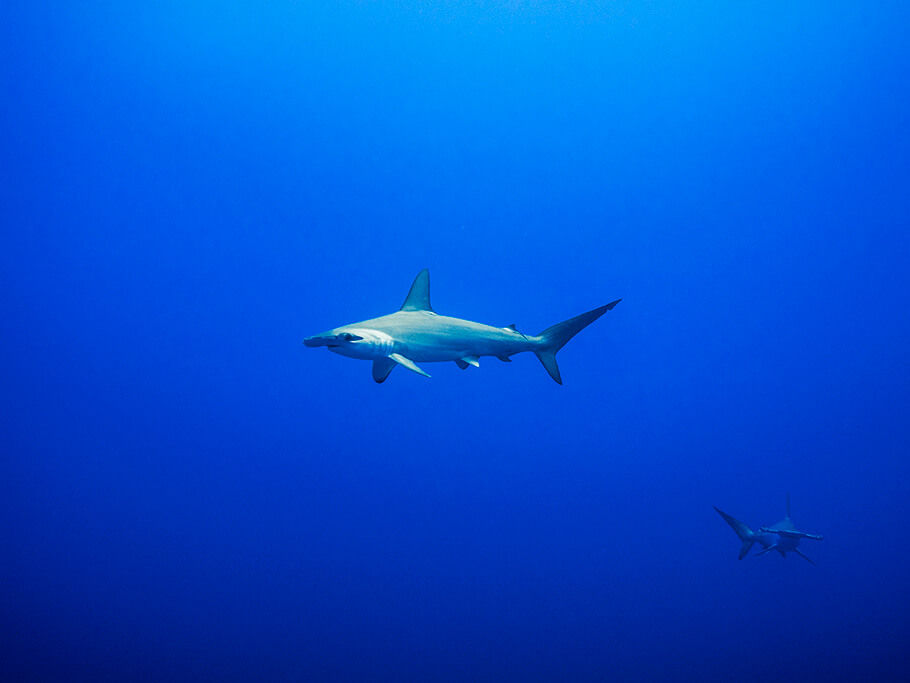
On plankton's enormous contribution to humanity
Next stop
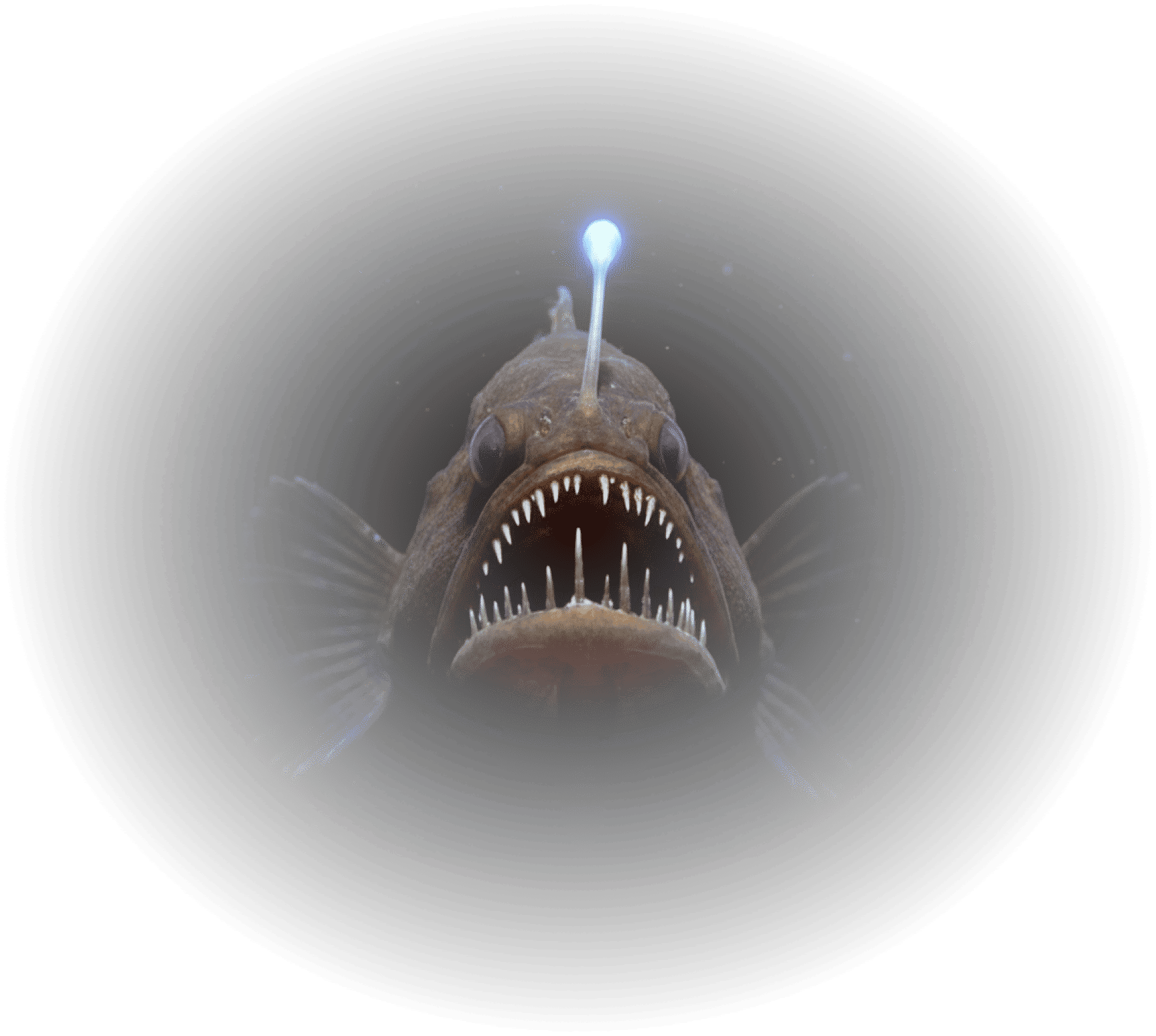
The Deep Sea
Dive into the mysterious depths of the sea, where unique creatures have adapted to life in extreme conditions